
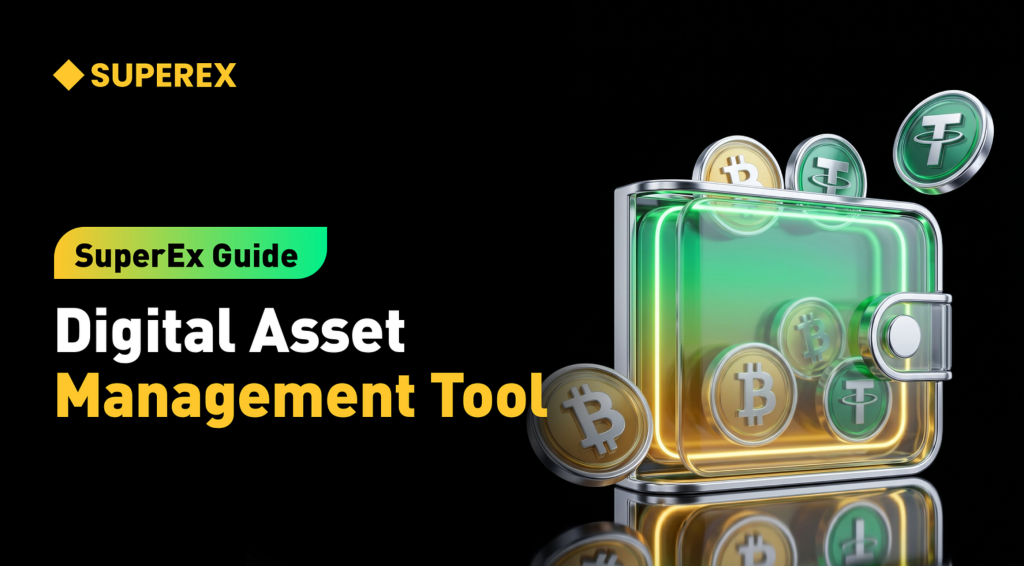
SuperEx Guide: Digital Asset Management Tool

#SuperEx #Guide #Wallet
A Web3 wallet is far more than just a place to store your crypto. It is your gateway to the entire Web3 world. Whether it’s DeFi, NFTs, GameFi, decentralized identities (DIDs), or countless on-chain ecosystems, your wallet is always the first point of entry. Among all Web3 wallets, none has been more iconic than MetaMask. Over the past few years, MetaMask has been the default choice for almost everyone — a browser extension wallet that is simple, reliable, and more than capable of meeting everyday needs.
However, as the industry has evolved, cross-chain ecosystems have expanded, and digital asset portfolios have grown, a new generation of wallets has emerged. From early cold wallets designed solely for storing Bitcoin to today’s multi-chain wallets that can connect to DeFi, NFTs, GameFi, and even decentralized social applications with a single click, the industry is shifting from being merely a “tool” to becoming the primary interface of the entire Web3 ecosystem.
Yet despite all these new features introduced over the past few years, the fundamental wallet experience has remained a compromise.
- Powerful features, but assets are still dependent on platform custody.
- Self-custody of private keys, but with a fragmented user experience and complicated operations.
- Multi-chain support, but with an unclear security model.
The result is that while assets live on-chain, the associated risks remain opaque. Most wallet iterations have focused on adding more and more features, making the ecosystem increasingly complex while leaving its core problems unresolved.
While most wallets continue competing by stacking more features, the SuperEx team chose a much cleaner path with Super Wallet.
Built around security and user sovereignty, Super Wallet redefines the very architecture of a Web3 wallet. It is no longer simply a container for digital assets — it is becoming the central gateway for managing assets, connecting decentralized applications, configuring permissions, and controlling risk.
The design philosophy behind Super Wallet is built entirely around this transformation.
What Is Super Wallet?
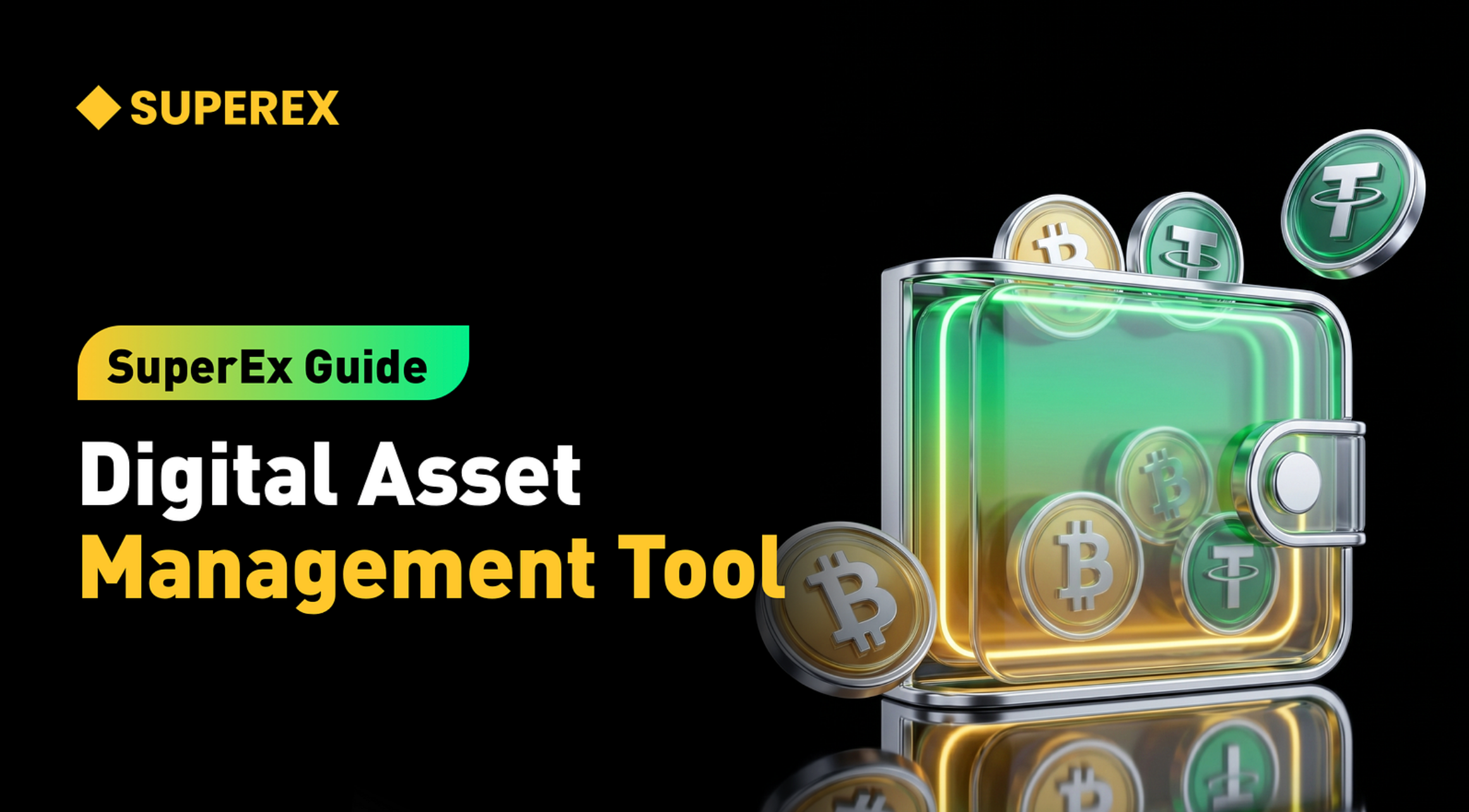
Super Wallet is SuperEx’s Web3 wallet solution, designed to support multi-chain asset management, on-chain interactions, permission management, cross-chain operations, and seamless access to decentralized applications (dApps).
For everyday users, Super Wallet serves as a simple and intuitive gateway into the Web3 ecosystem:
- Manage crypto assets across multiple blockchains
- Send and receive digital assets
- Connect directly to decentralized applications (dApps)
- View and monitor your asset allocation
- Switch between Web3 wallet interfaces more conveniently
But the true value of Super Wallet goes far beyond simply being functional. Its greatest strength lies in giving users clearer control over their assets and a much better understanding of their own risk boundaries while navigating Web3.
And that is exactly what sets Super Wallet apart from many traditional Web3 wallets.
Why Should Wallet Security Go Beyond Just Protecting Your Private Key?
When people talk about wallet security, their first instinct is usually, “Protect your private key.” While that is certainly important, in real-world Web3 usage, security risks extend far beyond losing your private key. More often than not, users are exposed to permission risks, smart contract risks, cross-chain risks, and risks arising from interacting with multiple decentralized applications.
For example:
- Connecting to an unfamiliar dApp
- Approving a smart contract to access your tokens
- Participating in DeFi yield farming or staking
- Transferring assets across different blockchains
- Using NFT or GameFi applications
Every on-chain interaction is, at its core, an act of granting permissions.
The problem with many traditional wallets is that permission management is often too broad. A user may only intend to allow an application to use a small amount of assets, yet unknowingly grants far more access than necessary. It’s like asking someone to pay a small bill on your behalf but accidentally handing over full access to your entire bank account.
What Super Wallet Emphasizes Is Permission Control.
One of the core principles behind Super Wallet is putting users in control of their permissions.
External Authorization: Allow Smart Contracts to Operate Only Within the Permissions You Grant
Super Wallet’s external authorization feature allows users to grant specific permissions to designated recipients, smart contracts, or application scenarios, enabling them to perform only the actions explicitly permitted by the user.
Simply put, users gain much finer control over:
- Who receives the authorization
- Which assets are being authorized
- How much can be accessed or spent
- What the authorization can be used for
- Whether the authorization scope should be modified later
This transforms wallet authorization from a simple “all or nothing” approach into a far more granular permission management system.
For example, when participating in a GameFi project, a user may only want to authorize a small amount of USDT for in-game interactions instead of granting the smart contract unrestricted access to a much larger portion of their assets. With more flexible authorization controls, users can achieve a better balance between convenience and security.
This is especially important for Web3 users.
Because the wallets of the future will no longer be just asset management tools — they will also serve as identity managers and permission controllers. Who can sign transactions on your behalf, who can access your assets, and which smart contracts are allowed to interact with your wallet will all become fundamental pillars of the Web3 security experience.
HD Wallet Architecture: Making Multi-Chain Asset Management Simpler
Super Wallet adopts an HD Wallet (Hierarchical Deterministic Wallet) architecture.
The key advantage of this architecture is that users no longer need to create and manage separate wallet systems for every blockchain. Instead, multiple blockchain addresses and assets can all be generated and managed within a single unified framework.
The improvements this architecture brings include:
- A more unified approach to managing assets across multiple blockchains
- No need to constantly switch between separate wallet structures
- A cleaner and more organized address structure
- An experience that feels much closer to managing a single account
- Smoother asset management across different blockchain networks
For everyday users, this significantly lowers the learning curve of using multiple blockchains.
For more experienced users, it provides a much clearer asset management workflow while reducing operational risks caused by juggling multiple wallets and numerous blockchain addresses.
Asset Isolation: Creating Different Security Boundaries for Different Types of Assets
Within the Web3 ecosystem, not all assets, blockchains, or applications carry the same level of risk.
Core long-term holdings and funds allocated for testing new projects should never be exposed to the same risk environment.
Super Wallet emphasizes asset isolation, allowing users to organize their assets based on different purposes, blockchain networks, and personal risk preferences.
The benefits of this design include:
- High-value assets can be managed with greater protection.
- Assets used for frequent transactions can be separated from long-term holdings.
- Assets allocated to DeFi, NFTs, and GameFi can remain separate from long-term investment portfolios.
- Even if one interaction becomes compromised, the potential impact on the rest of your assets can be significantly reduced.
Think of it as creating separate “security zones” for different categories of digital assets.
Not every asset needs to exist within the same authorization environment, nor should every interaction share the same security boundary. Users can configure their asset management strategy according to their own habits and risk tolerance.
This is one of the key reasons why Super Wallet is particularly well suited for multi-chain DeFi users, high-frequency on-chain participants, and users managing substantial digital asset portfolios.
Multi-Chain and Cross-Chain Support: Reducing Friction Across Web3
Today’s Web3 users rarely operate on just a single blockchain.
Ecosystems such as Ethereum, BNB Chain, and Solana each offer unique use cases. DeFi, NFTs, GameFi, and on-chain trading are all distributed across different networks. If a wallet cannot efficiently support multiple blockchains, the user experience quickly becomes interrupted by constant network switching, cross-chain transfers, gas fees, and complicated operational steps.
Super Wallet natively supports multi-chain asset management while providing cross-chain capabilities that allow users to move assets between different ecosystems more efficiently.
This provides several important advantages:
- Manage assets across multiple blockchains within a single wallet
- Enjoy a smoother cross-chain experience
- Reduce reliance on multiple third-party tools
- Lower the learning curve of interacting with multiple blockchains
- Improve overall efficiency across Web3 applications
For everyday users, this translates into a much simpler all-in-one experience.
For advanced users, it means greater efficiency when managing and allocating capital across different blockchain ecosystems.
A User Experience Closer to Modern Mobile Banking
One of the biggest shortcomings of many traditional Web3 wallets is that while they are powerful, they often come with a steep learning curve.
New users are frequently discouraged by complicated blockchain names, gas configurations, authorization prompts, smart contract interactions, and confusing asset management workflows.
Super Wallet adopts a user experience much closer to familiar mobile banking applications, emphasizing simplicity, clarity, and accessibility.
For example:
- One-click transfers
- One-click authorization
- One-click network switching
- Automatic token recognition
- Clearer and more intuitive risk alerts
- Visualized asset allocation
- More convenient switching between Web3 wallet interfaces
The goal of this design is not to reduce functionality, but to reduce the effort users must invest to understand and use those features.
A truly great Web3 wallet should never require its users to become technical experts before they can safely manage on-chain assets.
Who Is Super Wallet Designed For?
For beginners, Super Wallet serves as the ideal first step into the Web3 ecosystem.
It helps users manage digital assets, transfer funds, grant permissions, and interact with dApps, while minimizing the complexity traditionally associated with on-chain operations.
For DeFi users, Super Wallet’s granular authorization controls and asset isolation mechanisms provide better permission management and stronger risk control when participating in yield-generating strategies.
For NFT collectors and GameFi participants, Super Wallet supports authorization, asset ownership, and interactive on-chain experiences, allowing users to connect seamlessly with decentralized applications.
For professional traders and high-net-worth users, the value of Super Wallet lies in its more sophisticated asset segmentation, clearer permission management, and stronger multi-chain asset coordination capabilities.
In short:
- Everyday users need simplicity, security, and an intuitive experience.
- Experienced users need multi-chain support, permission management, and operational efficiency.
- Professional users need asset isolation, precise control, and clearly defined risk boundaries.
Super Wallet is designed to deliver value across all of these dimensions simultaneously.
Final Thoughts
Wallets are becoming the most important gateway into the Web3 world.
A wallet connects far more than just digital assets — it also connects identities, permissions, decentralized applications, and every on-chain interaction. A mature wallet should not simply focus on supporting more blockchains, more tokens, or more features. More importantly, it should help users understand and manage risk with confidence.
The true value of Super Wallet lies in transforming complex Web3 operations into a much clearer and more intuitive asset management experience.
Through granular authorization controls, users can define exactly what permissions smart contracts are allowed to have. Through asset isolation, they can establish different security boundaries for different assets and use cases. And with native multi-chain and cross-chain support, they can move seamlessly across the broader Web3 ecosystem.
Only when wallets evolve beyond being simple storage tools and become unified gateways for assets, identities, and permissions can Web3 truly be ready for mass adoption.
That is exactly what Super Wallet aims to deliver — a Web3 wallet experience that is safer, more flexible, and much closer to the real needs of everyday users.
Risk Disclosure
Interactions with Web3 wallets, on-chain authorizations, DeFi protocols, NFTs, and cross-chain operations all involve inherent risks.
Before granting permissions or conducting any asset-related transactions, users should carefully verify the authorization recipient, approval limits, and the smart contracts they are interacting with. All on-chain activities should be carried out prudently and in accordance with each user’s individual risk tolerance.
About SuperEx
As the world’s first Web3-powered cryptocurrency exchange, SuperEx has remained committed to building the Web3 ecosystem. Over the years, it has introduced a comprehensive range of products and services, including SuperEx DAO, SuperEx Web3 Wallet, Super Start, SuperEx P2P, SuperEx Stock Markets, SuperEx Copy Trading, SuperEx Earn, and SuperEx DAO Academy, creating a full-spectrum ecosystem that spans every major sector of Web3.
Today, SuperEx serves over 10 million users, with a social media community of more than 600,000 followers across 166 countries and regions worldwide. The platform supports 1,000+ cryptocurrencies for both spot and futures trading. Seamlessly integrated with Super Wallet, SuperEx provides decentralized asset custody while combining the trading efficiency of a centralized exchange (CEX) with the security of a decentralized exchange (DEX).
Click to register SuperEx
Click to download the SuperEx APP
Click to enter SuperEx CMC
Click to enter SuperEx DAO Academy — Space



Responses