
SuperEx Guide: Why Didn’t TP/SL Execute at the Trigger Price?

#SuperEx #Guide #TP/SL
When using the take profit or stop loss function, you may encounter situations where the market price reaches the trigger price for your take profit or stop loss, but the order doesn’t execute or doesn’t fully execute. This could be due to several factors, such as the trigger price type, order type, market volatility, order book depth, the number of orders, or insufficient margin. You need to evaluate the situation based on real-time conditions. Below are three common reasons why take profit or stop loss orders may not execute or fully execute:
- Click to register SuperEx
- Click to download the SuperEx APP
- Click to enter SuperEx CMC
- Click to enter SuperEx DAO Academy — Space
Trigger Price Not Reached
The take profit or stop loss trigger price needs to be successfully triggered before the order is placed in the market.
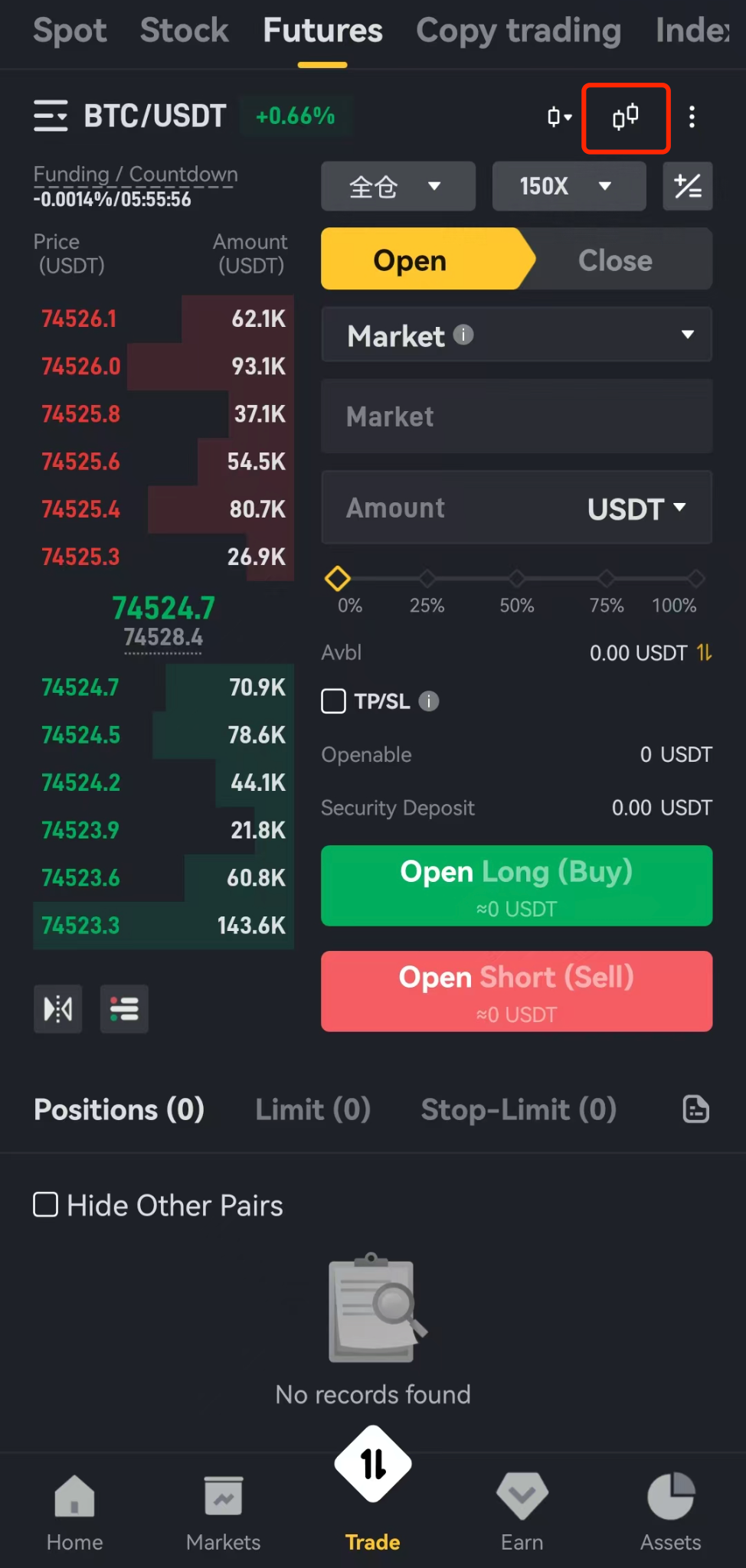
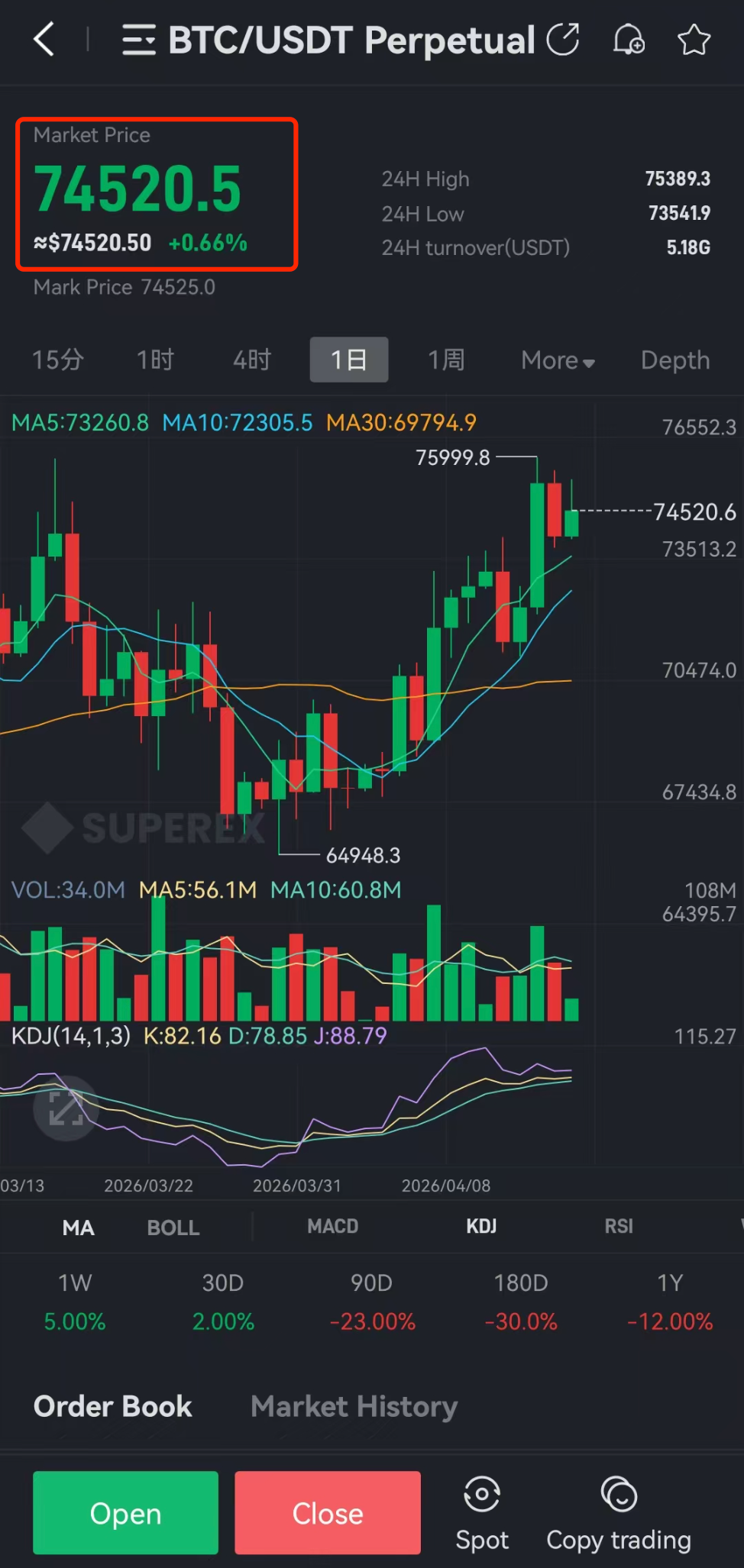
You can check the price movement on the chart, click on the trading chart page to see historical price movements, and compare them with the set trigger price to verify if it was actually triggered. If the trigger price for your take profit or stop loss hasn’t been reached, the order will not execute.
For example
In the ETH/USDT perpetual contract, a long position opened at a price of $74,000 with a take profit trigger price (mark price) set to $74,520.5 and a limit order set to $74,520.5.
If the price rises to $74,520.5 and then quickly drops, causing the latest market price to reach $74,520.5 but the mark price not reaching $74,520.5, and the trigger price is based on the mark price, the order will not be triggered.
The market order to take profit (close long at $74,520.5) will not be placed, and thus, it won’t be executed.
Limit Orders Not Executed or Fully Executed
There are two types of take profit and stop loss orders: market orders and limit orders.
A market order will be placed at the best available market price when triggered, helping you execute the trade quickly.
A limit order will be placed at your set price (the highest buy price or lowest sell price you accept) after being triggered.
By default, take profit or stop loss orders are market orders, but you can set them as limit orders. To increase the chances of a limit order executing, it is suggested to set the buy limit price slightly above the trigger price or the sell limit price slightly below the trigger price.
For example:
In the ETH/USDT perpetual contract, a long position opened at 3,204.6, with a stop loss trigger price set at 3,200.
If you set the stop loss as a limit order and both the trigger price and the limit order are set to 3,200, the stop loss will be triggered when the latest price hits 3,200, placing a limit sell order at 3,200. If the market moves quickly, the limit sell order at 3,200 may not execute immediately, or it may only be partially filled.
Therefore, in this case, the stop loss limit order could be set to 3,198 to improve the chance of execution.
Order Needs to Comply with Maximum Order Size and Market Matching Principles
Orders must comply with the maximum order size limit, and sufficient margin is required. If the order exceeds the maximum size limit or if there is insufficient margin when triggered, the order may fail.
Once the take profit or stop loss is triggered, the order placed into the market must also comply with the market matching principles of price priority and time priority.
Orders with better prices will be matched first. When prices are the same, orders will be executed in the order they were placed.
Therefore, your market/limit order may not be executed or may be partially executed if there are orders with better prices or earlier submission times in the market.
In conclusion, the execution of your take profit or stop loss order depends on several factors, including the trigger price type, order type, market volatility, order book depth, order volume, and margin sufficiency. It is recommended to carefully set your take profit and stop loss parameters to manage trading risks effectively.


Responses