
SuperEx Educational Series: Understanding Chain Abstraction Wallet

#SuperEx #EducationalSeries
Many Web3 wallets say they support multiple chains, but using them can feel like managing a dozen browser tabs.
- You want to buy an NFT, and the wallet asks: which chain?
- You want to transfer assets, and the wallet asks: do you have gas on the destination chain?
- You want to join a campaign, and the wallet says: your assets are on Arbitrum, but the app is on Base, please bridge first.
- User: I just wanted to click once.
- Wallet: no, first become a cross-chain engineer.
A Chain Abstraction Wallet tries to solve this problem: users should not be chased around by chains. The goal is not to make blockchains disappear, but to stop chain details from interrupting every action.
What Is a Chain Abstraction Wallet?
A Chain Abstraction Wallet is a wallet experience that hides multi-chain accounts, assets, gas, signatures, routing, and cross-chain execution behind one unified interface.
- A normal multi-chain wallet feels like: “I support many chains, you switch between them.”
- A chain abstraction wallet feels like: “Tell me what you want to do, and I will handle which chain, which asset, gas payment, and routing.”
It usually involves Smart Accounts, Gas Abstraction, Paymasters, cross-chain messaging, liquidity routing, intents, solvers, and unified account identifiers.
In one sentence: a Chain Abstraction Wallet is not just a wallet that supports more chains. It is a wallet that tries to make users think less about chains.
How Does It Work?
The core idea is separating user intent from underlying execution.
The user says:
- “I want to buy this asset.”
- “I want to join this campaign.”
- “I want to send money to this address.”
- “I want to complete this action in this app.”
The system handles:
- Where are the assets?
- Which chain is the app on?
- What pays gas?
- Is bridging needed?
- Should it swap first?
- Which route is cheaper?
- What happens if destination execution fails?
It is like a ride-hailing app. The user enters the destination, not the fuel cost, traffic lights, and highway exits. A chain abstraction wallet should work similarly: the user expresses intent, and the wallet plans execution.
Of course, the underlying system does not become simple. The complexity is absorbed by wallets, protocols, and infrastructure. In plain words: users do not need to see the kitchen, but the kitchen still needs to know how to cook.
Why It Matters
Chain Abstraction Wallets matter because Web3 is no longer a single-chain world.
A user may hold assets on Ethereum, NFTs on Base, activity records on Arbitrum, trading opportunities on Solana, and no gas on the destination chain. If the wallet still asks the user to manually switch networks, bridge assets, swap for gas, and find routes, the experience becomes very unfriendly.
The value of a chain abstraction wallet is moving users away from managing chains and back toward managing assets and actions.
- For ordinary users, it lowers friction.
- For apps, it improves conversion.
- For developers, it reduces chain-integration pressure.
- For institutions, it helps unify permissions, audits, and treasury operations.
If Web3 wants mass adoption, it cannot require users to take a cross-chain class before every action. Users are not stupid. They just should not need to study five protocols to click one button.
Key Components
First is unified accounts.
Users do not want to remember who they are on every chain. A chain abstraction wallet needs to unify multi-chain addresses, smart accounts, DIDs, or account mappings. Standards like CAIP-10 help provide a common format for identifying accounts across chains.
Second is unified balance.
Users care about how much usable value they have, not whether some sits on Polygon, some on Base, and some on Arbitrum. Particle Network’s Universal Accounts focus on the idea of one account, one balance, any chain.
Third is gas abstraction.
Users should not get stuck because they lack native gas on the destination chain. The wallet can use Paymasters, token-based payment, gas sponsorship, or automatic swaps to handle fees. Making users hunt for tiny amounts of gas is very vintage, and not in a good way.
Fourth is path optimization.
The same action may have many routes: swap first then bridge, bridge first then swap, use a liquidity network, or let a solver handle it. The wallet should choose a better route, not make the user become the navigation system.
Fifth is failure recovery.
Cross-chain actions can fail. A good wallet should show where the process is stuck, whether it can retry, whether it can refund, and who can execute the next step. A spinning loader alone is how users go from confused to emotionally damaged.
Difference from Multi-chain Wallets
- A multi-chain wallet asks: can I connect to many chains?
- A chain abstraction wallet asks: can users avoid thinking about those chains?
- A multi-chain wallet is like a remote control with many buttons.
- A chain abstraction wallet is more like an assistant: you say what you want, and it presses the right buttons.
This does not mean multi-chain wallets are useless. It means they still focus on supporting many networks. A chain abstraction wallet goes further by turning multi-chain execution into one unified product experience.
A Simple Case
Suppose Alice wants to buy an NFT on Base, but her funds are on Arbitrum, and she has no ETH on Base.
The traditional wallet experience looks like this:
- Switch to Arbitrum.
- Check assets.
- Find a bridge.
- Bridge to Base.
- Wait.
- Realize there is no gas on Base.
- Find a way to get gas.Return to the NFT page.
- Price changed.
- User goes silent.
A chain abstraction wallet should feel like this:
- Alice clicks buy.
- The wallet detects usable funds on Arbitrum.
- The system calculates a route, possibly bridging, swapping, and paying gas automatically.
- A Paymaster or gas abstraction system handles destination-chain fees.
- The NFT purchase completes on Base.
- Alice sees the result: bought.
The user sees one purchase and The system handles cross-chain routing, gas abstraction, liquidity coordination, message verification, and failure handling.
That feels like a product. The old experience basically says, “If you do not understand chains, do not use this.” That is not exactly mass adoption energy.
Common Misunderstandings
First misunderstanding: a chain abstraction wallet is just a multi-chain wallet.No. A multi-chain wallet says, “I support many chains.” A chain abstraction wallet says, “I handle them for you.” One is a tool list; the other is an experience upgrade.
Second misunderstanding: chain abstraction hides chains, so it must be unsafe.Not necessarily. Hiding complexity does not mean hiding risk. A good wallet should show route, fees, security assumptions, and failure handling in a way users can understand, instead of turning everything into a black box.
Third misunderstanding: one balance means all assets are literally in one place.Not exactly. Unified balance is a user-experience abstraction. The assets may still be spread across chains. The system uses liquidity, routing, and settlement to execute actions. The money did not magically merge; the system coordinates it.
Fourth misunderstanding: chain abstraction wallets are always cheaper.
Not always. They may be easier, but routes, bridges, solvers, gas, and liquidity costs still exist. Good systems optimize costs, but they cannot pretend costs disappear. The bill always arrives.
Risks and Limitations
Chain Abstraction Wallets are not magic. They make the experience smoother, but introduce new risk points.
First is black-box risk.
If the wallet only says “best route” without explaining why, which protocols are used, what fees apply, and what happens if it fails, users are basically signing blindly. Smooth UX should not become a mystery box.
Second is dependency risk.
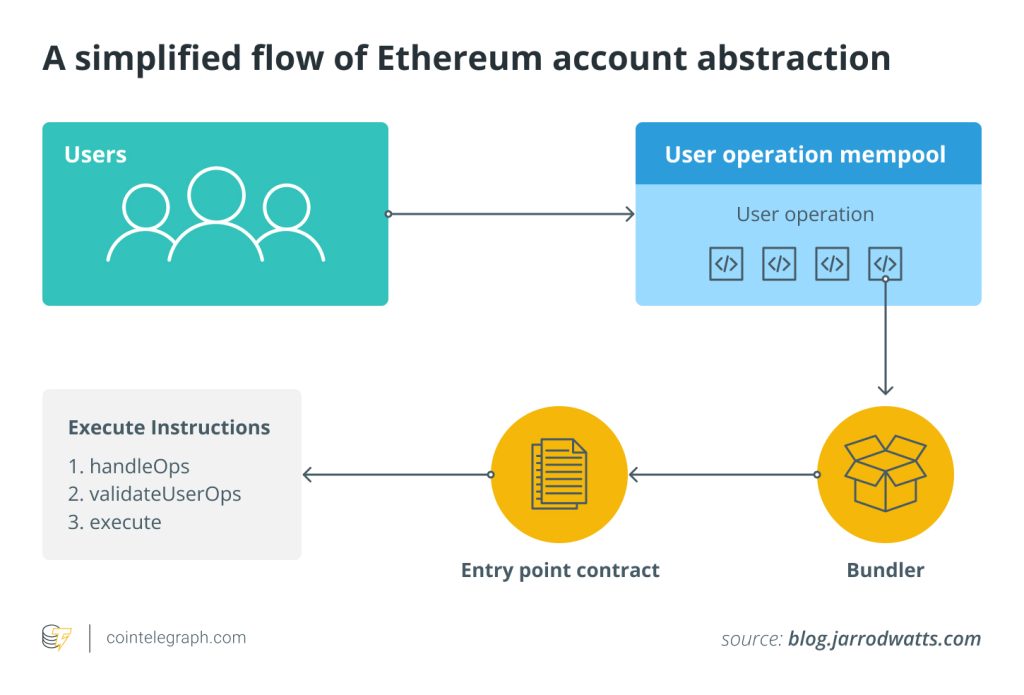
A chain abstraction wallet may rely on routers, solvers, Paymasters, Bundlers, messaging protocols, and liquidity networks. If these services fail or behave badly, users are affected. The smoother the front end, the stronger the backend must be.
Third is mixed security-model risk.
One action may go through several chains, contracts, a bridge, a solver, and a Paymaster. Every extra layer adds assumptions. The wallet should help users understand who they are trusting.
Fourth is privacy risk.
Unified accounts and balances are convenient, but if poorly designed, they can link a user’s behavior across chains into a fuller profile. Chain abstraction should consider identity masking and selective disclosure, not only convenience.
Fifth is lock-in risk.
If users rely heavily on one wallet or infrastructure stack, migration may become harder. Wallets should support open standards, exportable accounts, clear permissions, and compatibility with multiple services.
Conclusion
The core value of a Chain Abstraction Wallet is moving users from operating chains to expressing intent.
It is not merely supporting more networks, and it is not blindly hiding multi-chain complexity. It reorganizes accounts, balances, gas, routing, signatures, failure recovery, and security prompts into an experience normal users can actually use.
If Web3 truly becomes multi-chain, wallets cannot remain control panels for chains. They should become user assistants for on-chain actions: you state the goal, it plans the route; you confirm the risk, it executes; if something goes wrong, it tells you what to do.
In plain words, users do not want to switch chains, hunt for gas, bridge assets, inspect routes, and repair failed transactions every day. They want to click and get things done.A Chain Abstraction Wallet pushes Web3 one step from “only chain experts can use this” toward “normal people can use this too.”
About SuperEx
As the world’s first Web3-powered cryptocurrency exchange, SuperEx has remained committed to building the Web3 ecosystem. Over the years, it has introduced a comprehensive range of products and services, including SuperEx DAO, SuperEx Web3 Wallet, Super Start, SuperEx P2P, SuperEx Stock Markets, SuperEx Copy Trading, SuperEx Earn, and SuperEx DAO Academy, creating a full-spectrum ecosystem that spans every major sector of Web3.
Today, SuperEx serves over 10 million users, with a social media community of more than 600,000 followers across 166 countries and regions worldwide. The platform supports 1,000+ cryptocurrencies for both spot and futures trading. Seamlessly integrated with Super Wallet, SuperEx provides decentralized asset custody while combining the trading efficiency of a centralized exchange (CEX) with the security of a decentralized exchange (DEX).
- Cick to register SuperEx
- Cick to downoad the SuperEx APP
- Cick to enter SuperEx CMC
- Cick to enter SuperEx DAO Academy — Space

Responses