
SuperEx Educational Series: Understanding How Many Layers Are There Between a User’s Wallet and the Underlying Blockchain

#SuperEx #EducationalSeries #Blockchain
There is a button in every crypto wallet labeled “Confirm.”
That button creates a convenient illusion: you tap it, the wallet finds the blockchain, inserts the transaction, and the network replies, “Got it.”
The actual process is not nearly that direct.
During an ordinary on-chain action, a user’s intent may pass through a DApp interface, wallet permissions, transaction construction, private-key signing, an RPC service, a mempool, block building, and node execution before finally becoming confirmed blockchain state.
If the user relies on a smart account, Layer 2, Paymaster, or cross-chain protocol, the route may also involve bundlers, sequencers, bridge contracts, and message validators.
So how many layers actually exist between a wallet and the blockchain?
There is no fixed number that applies to every system. For practical understanding, a typical DApp transaction can be divided into roughly eight functional layers. A simple transfer may combine several of them, while a complex transaction may involve more than ten.
The phrase “Waiting for confirmation” compresses quite a lot of infrastructure into four words.

A Wallet Is Not the Blockchain; It Is the User’s Operating Layer
Before examining the full process, we should correct a common misconception: tokens are not literally stored inside the wallet.
Balances and ownership are recorded on the blockchain. A wallet stores or manages the keys used to authorize transactions, along with software that helps users read and change on-chain state.
In other words, a wallet is closer to an account controller than a digital box containing coins.
When a wallet displays a balance of 1 ETH, that number usually comes from on-chain data returned by a node. The wallet reads the current state of an address and presents it in a human-readable form.
When a user sends a transaction, the wallet does not directly modify the balance. It constructs an authorized instruction and submits that instruction to the blockchain network for execution.
A wallet therefore performs at least three core functions:
- It allows the user to express an intention, such as transferring, approving, swapping, or staking;
- It manages accounts and signing authority;
- It connects to nodes to read data and broadcast transactions.
Ethereum’s EIP-1193 describes a wallet as software that manages private keys, performs signing operations, and acts as middleware between an application provider and a blockchain client. EIP-1193 Provider Standard
This already shows that the wallet is not the chain itself. It stands between the user and a node, translating human actions into data the blockchain can understand.
Which Layers Does a Transaction Cross Before Entering a Block?
To see the full path, suppose Alice uses a DApp to swap USDT for another token.
The operation can be divided into eight functional layers, but they are not eight servers arranged neatly in a row. Some run on Alice’s phone, some belong to the DApp, some are supplied by infrastructure providers, and others exist within the blockchain network itself.
Stage One: Turning User Intent into a Signable Transaction
The first layer is the application interface.
Alice enters an amount, selects a token, and clicks Swap. The DApp considers liquidity, quotations, and routing to determine which smart contract to call, which path to use, and the minimum acceptable output.
At this point, Alice has expressed a human intention: “I want to exchange this USDT for that token.”
The blockchain cannot interpret that sentence directly. The DApp must translate it into structured data containing a contract address, function parameters, asset amounts, and a slippage limit.
The second layer is wallet connection and permissions.
The DApp requests the current account, network information, and permission to submit a transaction for signing. The wallet checks whether the website has been authorized to connect and displays the request to the user.
Connecting a wallet does not mean handing the private key to the DApp. Under a proper design, the DApp can request an action, but the actual signature remains under wallet control.
The risk is that a button may say “Claim Reward” while the underlying transaction requests unlimited token approval. The wallet should decode as much information as possible, but the user must still inspect the target contract, asset, and approval amount.
The third layer is transaction construction and simulation.
The wallet or DApp determines the destination, call data, transferred value, nonce, gas limit, and fee parameters. Some wallets also simulate the transaction before signing to estimate whether it will fail or produce suspicious asset changes.
Simulation is useful, but it is not an absolute guarantee about the future. It uses the current state, while price, balances, nonces, and contract conditions may change before actual execution.
The fourth layer is the key and signature layer.
After the user confirms, the wallet uses the private key to digitally sign the transaction. The signature proves that the controller of the address authorized the action and prevents others from changing the signed contents.
The private key does not need to be sent to the blockchain and should never be given to the DApp or RPC provider. The network only needs to verify that the signature corresponds to the sending address.
Only after this step does the user’s intention become a cryptographically valid transaction instruction.
Stage Two: Leaving the Wallet and Entering the Network
The fifth layer is the provider and RPC layer.
A wallet normally does not maintain a full blockchain node by itself. Instead, it communicates with a node through RPC. Reading balances, estimating gas, checking nonces, and broadcasting transactions may all happen through this interface.
Ethereum’s documentation explains that an application must connect to an Ethereum node to read blockchain data or send transactions, while JSON-RPC provides standardized methods across client implementations. Ethereum JSON-RPC Documentation
An RPC service cannot modify a correctly signed transaction without invalidating its signature. However, it can delay, reject, or fail to broadcast the transaction. It may also return incorrect or stale information when handling read requests.
An RPC provider is not the custodian of the assets, but it can become an availability bottleneck between the user and the network.
The sixth layer is the transaction pool and ordering layer.
After receiving a transaction, a node checks its signature, nonce, gas settings, balance, and other basic conditions. Valid transactions usually enter the node’s pending transaction pool and propagate to other nodes.
Entering the mempool does not mean the transaction is already on-chain.
It only means that some nodes know the transaction is waiting. A block builder must still select it from many pending transactions and determine its execution order.
During congestion, lower-fee transactions may wait longer. If account nonces are not sequential, later transactions may also be blocked behind an earlier one. A transaction that remains “Pending” is often stuck at this layer.
Stage Three: Network Execution and Final State
The seventh layer is block execution and state update.
Once selected for a block, the execution client processes the transaction in order. A simple transfer changes account balances, while a contract interaction executes code in the virtual machine.
- If Alice’s swap succeeds, her USDT balance, target-token balance, and the liquidity pool state all update according to contract rules.
- If the transaction fails because of slippage, insufficient approval, or unmet contract conditions, state changes revert. However, the computational resources already consumed generally still require gas payment.
Ethereum describes transactions as cryptographically signed instructions initiated by accounts to change network state. After broadcast, a validator must include and execute the transaction in a block. Ethereum Transaction Lifecycle
The eighth layer is consensus, finality, and result delivery.
Inclusion in one block does not always mean immediate finality. Network nodes must accept the block, and subsequent consensus increases confidence that it will not be replaced.
The wallet or DApp continues querying the transaction through an RPC service, block explorer, or indexer before showing “Successful,” “Failed,” or “Confirmed.”
The success indicator in the wallet is therefore a representation of the network result. The green checkmark does not make the transaction valid. The underlying chain accepting the new state does.
How Many Additional Layers Do Smart Accounts, Layer 2s, and Cross-Chain Operations Add?
The eight layers above are a practical conceptual model. Not every wallet follows exactly the same route.
With a traditional externally owned account, the private key directly signs a blockchain transaction, creating a relatively simple path.
Smart accounts may add new participants.
Under ERC-4337, the user creates a UserOperation rather than a normal transaction. It enters a specialized operation pool, where a bundler collects and packages it before submitting it on-chain through the EntryPoint contract.
If a Paymaster sponsors gas, it must verify that the operation satisfies its sponsorship conditions and agree to pay the fee.
The ERC-4337 specification explicitly distinguishes between UserOperations, bundlers, the EntryPoint contract, and Paymasters. ERC-4337 Account Abstraction Specification
This enables social recovery, batched actions, gas sponsorship, and custom verification. It also means the transaction path now includes bundler and Paymaster services.
Layer 2 networks introduce sequencers and settlement processes.
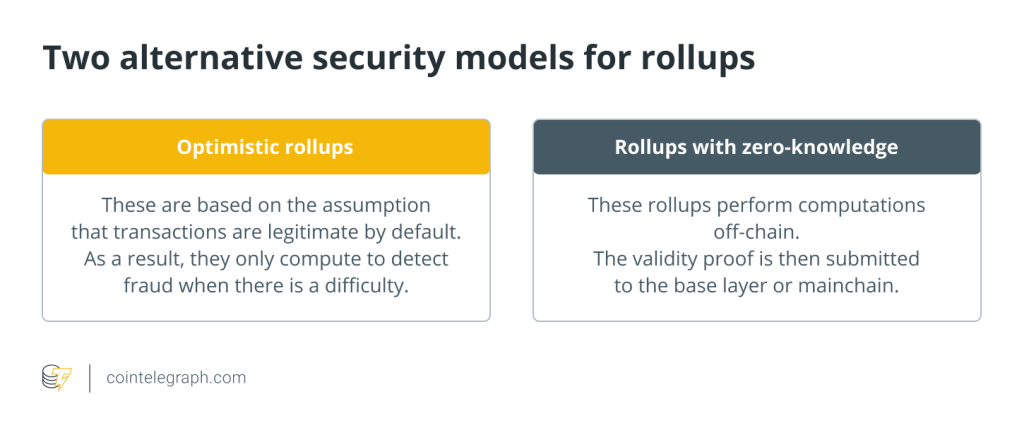
A transaction may first be received and executed by a Layer 2 sequencer. The rollup later submits batch data or proofs to the underlying chain. When a wallet displays “confirmed on Layer 2,” it may mean the sequencer has accepted the transaction, not that final settlement on the base chain is complete.
Cross-chain operations are more complex still.
After assets are locked or burned on the source chain, a cross-chain protocol must observe the event, wait for sufficient confirmations, generate or collect proof, transmit a message to the destination chain, and finally execute through a destination-chain contract.
What appears to the user as one “cross-chain transfer” actually involves at least two blockchains, two state transitions, and an intermediate verification mechanism.
More layers do not necessarily make a system worse. Many are added to reduce costs, improve usability, or connect different networks.
The more layers involved, however, the more users should understand which are replaceable, which require trust, which can delay a transaction, and which failures may directly affect assets.
The Same “Transaction Failed” Message Can Hide Very Different Problems
When users encounter a problem, the wallet often displays only a short message: connection failed, signature failed, broadcast failed, pending, or execution failed.
These errors originate from completely different layers.
- If the DApp generates incorrect contract parameters, the problem lies in the application or transaction-construction layer.
- If the user rejects the signature or the wallet detects the wrong network, the transaction never leaves the wallet.
- If the wallet produces a local transaction hash but no block explorer can find it, the RPC provider may have failed to broadcast it.
- If the transaction appears in the mempool but remains unconfirmed, low fees, a blocked nonce, or network congestion may be responsible.
- If the transaction entered a block but shows a failed status, the chain executed it, but the contract conditions were not satisfied.
- If the transaction succeeded on-chain while the wallet still shows pending, the RPC, cache, or indexer may simply be behind.
When troubleshooting a wallet transaction, the most important question is not what the interface says, but how far the transaction actually traveled.
Whether a transaction hash exists, whether explorers can find it, whether it has been included, what its execution status is, and whether account nonces remain sequential are often more useful than repeatedly pressing the button.
Repeatedly clicking “Confirm” does not make the blockchain feel a greater sense of urgency. It may simply create more pending transactions.
SuperEx Example: Simplifying the Process Without Hiding Asset Control
SuperEx Web3 Wallet allows users to manage multi-chain assets, connect to DApps, and initiate on-chain transactions through one wallet interface.
These features combine network selection, address display, transaction construction, signing, and broadcasting into a flow that is easier for users to understand.
Interface integration does not mean that the wallet replaces the underlying blockchain or that one system controls every layer.
According to SuperEx’s public Web3 Wallet documentation, it is non-custodial and does not store or recover users’ passwords, seed phrases, or private keys. Control over the corresponding on-chain addresses remains with whoever possesses the seed phrase or private key. SuperEx Web3 Wallet FAQ
This means SuperEx Web3 Wallet can improve usability, display on-chain information, and transmit transaction requests, while user authorization still depends on local keys and final outcomes remain subject to the rules of the destination blockchain.
If RPC or display data becomes temporarily unavailable, on-chain assets do not automatically disappear. But if a user exposes a seed phrase, even the best interface cannot protect signing authority that has already been compromised.
A mature wallet does more than send transactions. It should also reduce user error through clear handling of addresses, networks, approvals, gas, contract interactions, and security warnings.
A wallet can make an eight-layer process feel like one step, but its security design cannot pretend that the other seven layers do not exist.
Conclusion
There is no simple straight line between a user’s wallet and the underlying blockchain.
A typical DApp transaction can be understood through roughly eight functional layers: application interaction, wallet permissions, transaction construction, key signing, RPC connectivity, transaction pooling and ordering, on-chain execution, and consensus finality with result delivery.
A simple transfer may combine some of these layers. Smart accounts add bundlers and Paymasters, Layer 2 introduces sequencers and settlement, and cross-chain transactions connect two chains through an intermediate verification system.
Each layer solves a different problem.
The wallet helps users express and authorize intent. RPC connects to nodes. The mempool holds and propagates pending transactions. Block builders select and order them. Execution clients run them. The consensus network ensures nodes accept the same result.
Ultimately, the wallet is not the blockchain itself. It is the interface that packages a complex distributed system into something ordinary users can operate.
You tap one button, but behind it sits an entire chain of infrastructure.
References
Ethereum: Transactions and Transaction Lifecycle
EIP-1193: Ethereum Provider JavaScript API
ERC-4337: Account Abstraction Using an Alternative Mempool
About SuperEx
As the world’s first Web3-powered cryptocurrency exchange, SuperEx remains committed to building the Web3 ecosystem through products and services including SuperEx DAO, SuperEx Web3 Wallet, Super Start, SuperEx P2P, SuperEx Stock Markets, SuperEx Copy Trading, SuperEx Earn, and SuperEx DAO Academy.
Today, SuperEx serves more than 10 million users across 166 countries and regions and supports spot and futures trading for over 1,000 crypto assets.
Click to register SuperEx
Click to download the SuperEx APP
Click to enter SuperEx CMC
Click to enter SuperEx DAO Academy — Space


Responses