
When “Small-Cap Tokens” Are No Longer Limited to Spot Trading:The Trading Paradigm Shift Behind Index Futures Trading


#IndexFutures #Spot
For a long time, “small-cap tokens” have occupied an awkward position:
- On the one hand, they often carry users’ earliest investment convictions and long-term narratives — ecosystems, communities, and imagined future potential;
- On the other hand, in actual trading practice, these assets are more often just positions that “sit idle in the account,” rarely able to truly participate in the volatility of mainstream market movements.
If you want to trade mainstream assets like BTC or ETH, there has traditionally been almost only one path: first convert your small-cap tokens into USDT, and then enter the derivatives market.
This process may appear natural and taken for granted, but it hides a series of very real problems: currency conversion friction, slippage losses, operational costs, and — more importantly — the forced fragmentation of asset structure. Long-term holding and short-term trading often become two completely separate and incompatible logics.
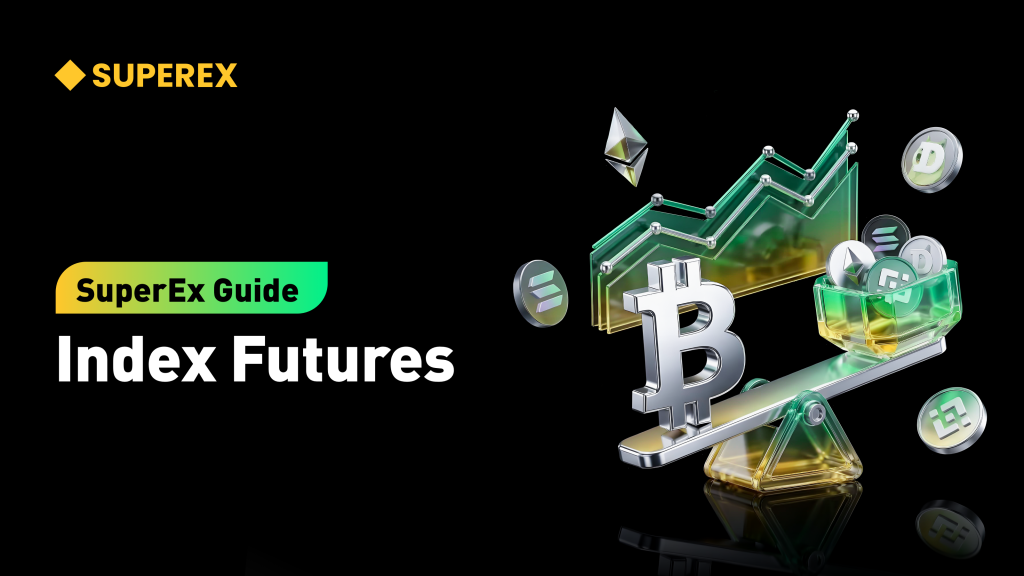
The Index Futures Trading product launched by SuperEx directly breaks this long-standing separation. In this product, users can directly use their small-cap tokens as margin to trade perpetual contracts pegged to BTC and ETH index prices, with profits and losses settled in the original token. In other words, small-cap tokens are no longer just “positions waiting for price appreciation,” but are, for the first time, systematically integrated into mainstream market volatility.
Those who are interested can try it directly in the SuperEx App. Official website: www.superex.com

From “You Must Convert to USDT to Trade” to “Assets Themselves Participate in the Market”
The reason traditional derivatives systems rely so heavily on USDT is, at its core, to unify settlement units and simplify risk control models. But today, the limitations of this design are becoming increasingly apparent.
For many users, small-cap tokens are not “short-term speculative assets,” but portfolios that have already been allocated and are intended to be held long term. Frequently rebalancing or converting assets just to participate in mainstream market movements often disrupts the original asset logic instead.
The core change introduced by Index Futures Trading is this: users no longer need to “liquidate assets first” in order to participate in mainstream market trends.
Within SuperEx’s Index Futures Trading system, users can directly use their small-cap tokens as margin and settlement assets, while the trading target itself is the index price of mainstream assets such as BTC and ETH. What you are trading is the trend of the mainstream market, not the volatility caused by the limited liquidity of small-cap tokens themselves.
- No need to convert small-cap tokens into USDT or BTC
- Reduced currency conversion friction and potential slippage losses
- More flexible capital management
This is not a “new trading gimmick,” but a restructuring of the trading pathway itself.
Put simply: users can enter mainstream market trading scenarios without converting small-cap tokens into USDT or other assets, avoiding conversion costs and reducing the psychological and decision-making pressure caused by frequent asset changes. For many users, small-cap tokens represent long-term asset allocation, while mainstream market trends are short-term trading opportunities. This product connects the two, balancing long-term investment with flexible trading needs.
Index Pricing + Perpetual Mechanism: Separating Risk from “Small-Cap Volatility”
One often overlooked issue is that small-cap tokens are not suitable as price discovery tools — but they can serve as effective vehicles for value participation.
If small-cap tokens are traded directly against each other, prices are easily distorted by insufficient liquidity and shallow order books. For small-cap tokens to function as settlement assets in derivatives trading, risk must be separated from “small-cap volatility.” The key that enables this model is SuperEx’s adoption of a multi-exchange weighted index pricing mechanism combined with a mature perpetual contract structure:
- Index prices are formed through weighted aggregation across multiple platforms
- Noise and abnormal price fluctuations are effectively filtered out
- Liquidation and settlement are based on mark prices
- Fairness and stability are balanced
What users are trading is not the price fluctuation of the small-cap token itself, but the average market-wide trend of mainstream assets like BTC and ETH. This significantly reduces price distortion caused by insufficient depth on a single exchange. Especially in situations where small-cap tokens have limited liquidity and thin order books, sudden price shocks, extreme spikes, or abnormal volatility can easily occur, leading to accidental liquidations. This structure ensures that trading behavior is genuinely anchored to mainstream market trends.
In other words, the small-cap token acts only as the capital carrier, while price movements are anchored to mainstream market consensus.
This structure makes the trading experience closer to traditional financial “index contracts,” while still preserving the flexibility of crypto assets and the openness of settlement boundaries.
From “Passive Holding” to “Structural Participation”
What truly makes Index Futures Trading interesting is not merely the ability to use small-cap tokens as margin, but the way it changes the role of small-cap assets themselves.
Under traditional models, small-cap tokens function more like static positions: prices go up — you check your account; prices go down — you keep waiting.
Under the new structure, small-cap tokens gain functional utility:
- They can be used as contract margin
- They can participate in mainstream trend trading
- Profits and losses are still settled in the original token
This means small-cap tokens are no longer just “bets on a future narrative,” but can take on more active roles across different market phases.
- For long-term holders, this represents an improvement in asset efficiency;
- For strategy-driven and quantitative traders, this introduces new hedging and arbitrage tools.
Not Replacing USDT, but Giving Users More Choice
It is important to emphasize that Index Futures Trading is not designed to “replace” existing USDT-margined or coin-margined contracts. Instead, it fills a long-missing gap.
- USDT-margined contracts are suited for standardized trading and capital management
- Coin-margined contracts better align with long-term holders of mainstream assets
- Index Futures Trading connects small-cap assets with mainstream market movements
This allows SuperEx’s derivatives system to move beyond reliance on a single settlement asset and instead be designed around users’ real asset structures and usage scenarios.
Other Core Product Advantages
1. New Tools for Hedging and Arbitrage
Users can achieve through this product:
- Hedging risk exposure of small-cap holdings
- Directional trading on mainstream market trends
- Expanded strategy space for quantitative and professional users
2. Index Pricing for Greater Stability and Fairness
- Multi-exchange weighted pricing
- Smoothing of abnormal volatility
- Liquidation and settlement based on mark prices
- Effective protection of user trading experience and system stability
3. A More Diverse Derivatives Product Matrix
Distinct from traditional USDT-margined and coin-margined contracts, SuperEx is building a differentiated index derivatives system, enhancing platform innovation and market recognition.
Operational Flow (Based on Personal Hands-On Experience)
Step 1
Asset transfer: move the target token (e.g., SHIB) from the spot account to the Index Futures Trading account, e.g., deposit 10,000 SHIB.
Step 2
Select the pegged index asset: for example, choose the BTC/USDT index price.
Step 3
Set leverage and position mode: for example, select 10x leverage with cross margin.
Step 4
Confirm position size and direction: for example, open a long position of 500,000 SHIB.
Step 5
Position management: monitor price movements of the pegged asset in real time and choose appropriate exit timing.
Step 6
Close position: based on the BTC/USDT index price. For example, when BTC/USDT rises to 110,000 USDT, unrealized PnL is 50,000 SHIB, then choose to close the position.
Step 7
Settlement: profits and losses are settled directly in SHIB, funds are credited in real time, realized PnL: 50,000 SHIB.
Note: The above process is a personal operational example shared by the author. Steps are for reference only. Actual trading involves fees, funding costs, and price spreads.
Final Thoughts
In the crypto industry, product innovation is often misunderstood as “new gameplay.” But truly valuable innovation is often quiet — it subtly reshapes user behavior pathways.
The significance of Index Futures Trading does not lie in how many margin assets it supports, but in how it re-answers an old question:
when you already hold assets, do you really need to give them up first in order to participate in the market?
SuperEx’s answer is: no.
- You can continue holding the ecosystems you believe in, while naturally participating in mainstream market movements;
- You no longer need to choose between “long-term conviction” and “short-term trading,” but can allow assets to play different roles across different cycles.
This is not a radical revolution — but it may well be an evolution that aligns more closely with real user needs.


Responses