
When Small-Cap Tokens Are No Longer Just “Held and Waited For”:How I Began to Rethink Contract Trading

#IndexFutures #derivatives
From the day crypto derivatives were born, contract trading has essentially been a game with preset rules for everyone. The first thing you are required to do is to convert your assets into USDT — or at least into BTC or ETH. Only then are you allowed to participate in mainstream market movements.
This feels almost like an iron law, unquestionable and unshakable. As for the small-cap tokens in your wallet, no matter how confident you are in their long-term value, they have little to do with contracts. Most of the time, your only options are to keep holding them, or trade them in and out in the spot market.
This structure is not irrational. But over time, we have become so accustomed to it that we rarely stop to ask a simple question: Do these valuable small-cap tokens really have no other way to be used?
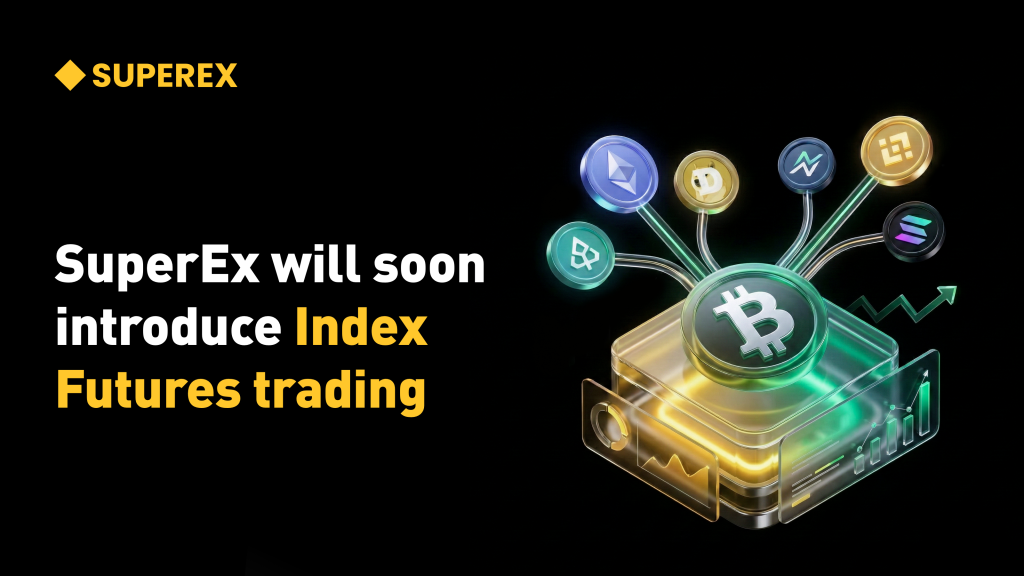
Recently, while following updates in the derivatives space, I noticed that SuperEx launched a new feature — Index Futures Trading. At first glance, it didn’t look “explosive,” nor did it resemble a typical marketing gimmick. But the more I looked into it, the clearer it became that it was addressing a long-overlooked issue: asset participation rights.
In this product, users can directly use small-cap tokens as margin to trade perpetual contracts anchored to BTC and ETH index prices, with profits and losses settled in the original token itself. In other words, small-cap tokens are no longer just passive positions “waiting for a pump,” but are, for the first time, systematically integrated into mainstream market volatility.
Those interested can experience it directly in the SuperEx App. Official website: www.superex.com

Lowering the Barrier to Mainstream Derivatives,No More “Converting to USDT” to Participate in Major Market Trends
- No need to convert small-cap tokens into USDT or BTC
- Reduced conversion friction and potential slippage
- More flexible asset management
Simply put, users can enter mainstream market trading scenarios without converting their small-cap tokens into USDT or other assets. This avoids conversion costs and reduces the psychological and decision-making pressure caused by frequent asset changes.
For many users, small-cap tokens represent long-term strategic positions, while BTC and ETH trends offer short-term trading opportunities. This product connects the two, balancing long-term investment with flexible trading needs.
Index Pricing + Perpetual Mechanism:Making “Small-Cap Participation in Mainstream Markets” Possible
The key that makes this model viable lies in SuperEx’s adoption of a multi-exchange weighted index pricing mechanism, combined with a mature perpetual futures structure.
- Index prices are formed through weighted aggregation across multiple platforms
- Noise and abnormal price fluctuations are effectively filtered out
- Liquidation and settlement are based on mark prices
- Fairness and stability are both preserved
What users are trading is not the price volatility of the small-cap token itself, but the average market trend of mainstream assets such as BTC and ETH across the broader market.
This significantly reduces price distortion caused by insufficient depth in a single market. Especially for small-cap tokens with limited liquidity and thin order books, prices can easily be impacted instantaneously, creating “wick spikes” or extreme abnormal volatility that leads to unnecessary liquidations. This structure ensures that trading behavior genuinely follows mainstream market trends.
In other words, small-cap tokens serve purely as the capital carrier, while price discovery is anchored to mainstream market consensus.
This structure brings the trading experience closer to traditional financial index derivatives, while still preserving the flexibility of crypto asset forms and open settlement boundaries.
For Users, This Is an Upgrade in Asset Efficiency
Under traditional models, small-cap token holders often face a dilemma:
continue holding long term and miss cyclical opportunities, or sell and convert to USDT to trade — sacrificing original asset exposure.
The emergence of Index Futures Trading makes these two choices no longer mutually exclusive.
Users can participate directly in mainstream market movements without selling or converting their assets. Profits and losses are settled in the original token, avoiding the complexity of frequent asset switching. For users who are long-term believers in small-cap ecosystems but also want exposure to broader market trends, this provides a more balanced path.
From this perspective, this is not merely “a new contract product,” but a shift from passive holding to active asset management.
For the Industry, This Is a Loosening of Contract Structures
More importantly, the significance of Index Futures Trading is not limited to a single platform.
For a long time, crypto derivatives markets have been highly concentrated around a small set of settlement assets. While this improved liquidity, it also compressed the participation space for asset diversity. Through the combination of index anchoring and multi-asset settlement, SuperEx provides a new structural reference for the derivatives market.
It proves one thing: the right to trade mainstream market trends does not have to be bound to a single settlement currency.
If this model gains broader acceptance, the derivatives market may gradually shift from “settlement-currency centralization” toward “multi-asset entry diversification.”
Additional Core Advantages
1. New Tools for Hedging and Arbitrage
Users can leverage this product to:
- Hedge risks associated with small-cap holdings
- Trade directional movements in mainstream assets
- Unlock more strategy space for quantitative and professional traders
2. Index Pricing: More Stable and Fair
- Weighted pricing across multiple exchanges
- Smoothed abnormal volatility
- Liquidation and settlement based on mark prices
- Effective protection of user experience and system stability
3. A More Comprehensive Derivatives Product Matrix
Distinct from traditional USDT-margined and coin-margined contracts, this builds a differentiated Index Futures Trading derivatives system for SuperEx, enhancing platform innovation and market recognition.
Operational Flow (Based on Personal Hands-On Experience)
Step 1
Asset Transfer: Transfer the target token (e.g., SHIB) from the spot account to the Index Futures Trading account.
Example: Deposit 10,000 SHIB.
Step 2
Select the Index Anchor: Choose the BTC/USDT index price.
Step 3
Set Leverage and Position Mode: For example, 10x leverage with cross-margin mode.
Step 4
Confirm Position Size and Direction: For example, open a long position of 500,000 SHIB.
Step 5
Position Management: Monitor the anchored index price movement and choose an appropriate exit.
Step 6
Close Position: Close based on the BTC/USDT index price.
Example: When BTC/USDT reaches 110,000 USDT, unrealized PnL is 50,000 SHIB — choose to close.
Step 7
Settlement: Profits and losses are settled directly in SHIB, with funds credited in real time.
Realized PnL: 50,000 SHIB.
Note:The above process reflects the author’s personal experience and is for reference only. Actual trading involves fees, funding rates, and price spreads.
Final Thoughts
From one perspective, Index Futures Trading is not teaching users how to trade more aggressively. Instead, it is redefining a more fundamental question: which assets are qualified to participate in core market volatility.
When small-cap tokens can participate directly in BTC and ETH market movements without conversion, the rigid hierarchy between assets begins to loosen. Long-term holding no longer inherently means giving up liquidity, and short-term trading no longer requires liquidating positions entirely. Assets begin to take on multiple roles instead of being locked into a single function.
This change may appear subtle, but it could be more meaningful than pure performance improvements. It does not create new speculative tools; it allows existing assets to participate in markets in more ways.
If past derivatives systems were essentially about filtering “who gets to enter the game,” then this design philosophy answers a different question: how assets maintain efficiency across different cycles instead of passively waiting.
It may not immediately change everyone’s trading habits, but it may gradually reshape the market’s default assumptions about how assets should be used. And truly valuable products often begin with precisely these understated shifts.


Responses