
SuperEx Educational Series: Understanding Settlement Layer Design

#SuperEx #EducationalSeries
In the previous content, we have already mentioned an important change: execution and settlement have begun to be designed separately.
Once these two parts are separated, a new question emerges: how exactly should the settlement layer be designed?
Because once the settlement layer has a problem, the entire system will have problems, so its design determines the “underlying security” of the system.
Based on this question, this article will clearly explain: what the Settlement Layer is, and how it is designed.
- Click to register SuperEx
- Click to download the SuperEx APP
- Click to enter SuperEx CMC
- Click to enter SuperEx DAO Academy — Space

What is the Settlement Layer
Let’s start with a simple definition: the Settlement Layer is the layer responsible for the final confirmation of transaction states.
You can understand it as the system’s “final judge” — all transactions, no matter where they are executed, must ultimately be confirmed here, and once confirmed, they cannot be changed.
This design sounds simple, but behind it there are several key problems that need to be solved.
First is the issue of finality
The Settlement Layer must ensure that once a transaction is confirmed, it can never be rolled back or tampered with.
This means it needs extremely strong resistance to attacks, usually achieved through economic incentives, cryptographic guarantees, or social consensus.
In blockchain systems, this is often reflected as sufficiently high attack costs — for example, requiring control over a large amount of staked assets or computational power to attempt to reverse transactions, and such costs are practically unbearable in reality.
Next is the verification mechanism
Since the execution layer and the settlement layer are already separated, the settlement layer does not directly execute transactions, but instead verifies the results submitted by the execution layer.
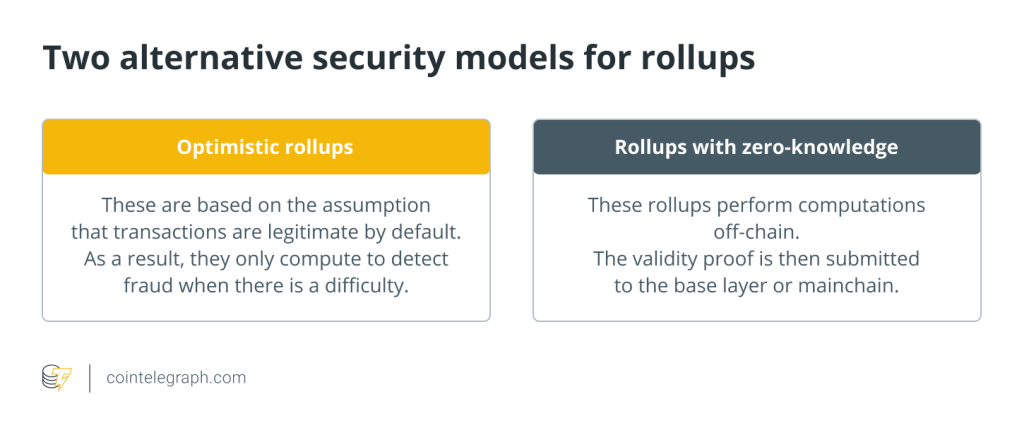
This verification can be optimistic, meaning the result is assumed correct unless challenged; it can also be zero-knowledge proof-based, directly verifying computation validity through cryptographic methods. Each approach has trade-offs: optimistic verification has longer delays but lower cost, while zero-knowledge verification provides instant confirmation but with higher computational overhead.
Next is asset custody
The Settlement Layer usually holds the system’s native assets or core collateral, and the security of these assets directly depends on the design of the settlement layer.
Therefore, the settlement layer often adopts a highly simplified functional design — only handling the most necessary operations, reducing code complexity and potential attack surfaces. This “less is more” philosophy forms a sharp contrast with the flexible innovation of the execution layer.
Finally, cross-layer coordination
When multiple execution layers share the same Settlement Layer, the settlement layer needs to handle coordination tasks such as state ordering, data availability proofs, and fraud arbitration.
This requires the settlement layer to have clear state transition rules and well-defined dispute resolution processes, ensuring that execution layers can operate independently while still achieving unified state consensus at the settlement layer.
From real-world cases, the evolution of Ethereum’s role as a settlement layer is quite representative. In the early stage, it handled both execution and settlement functions; with the development of Rollup technology, execution gradually moved to L2, while Ethereum mainnet focused on final state confirmation, data availability assurance, and cross-rollup security anchoring. This division of labor allows Ethereum to support continuously expanding execution demands on upper layers with relatively fixed resource consumption.
Returning to the topic itself: the settlement layer mainly handles three things
1. State confirmation
It records the results from the execution layer, for example:
- whose assets increase
- whose assets decrease
All of these will be written into the state.
2. Security guarantee
Ensure that data cannot be tampered with; once confirmed, it cannot be rolled back. This usually relies on consensus mechanisms and decentralized networks.
3. Dispute resolution
If issues occur in the execution layer, the settlement layer needs to determine “which result is correct,” which is very important in some Layer2 solutions.
At this point, you should understand one thing: execution can happen outside, but ultimate security must rely on the settlement layer, because the settlement layer determines the upper limit of the system’s security.
This leads to a simple logic: the execution layer can make mistakes, but the settlement layer cannot.
Current directions of Settlement Layer design
1. Strong security model
This type of settlement layer prioritizes security above all else, even at the cost of speed. It is usually used for main chains.
The core idea of this design is very straightforward: ensure absolute security first, then consider other factors.
In this model:
- Every transaction goes through full verification
- All nodes participate in confirmation
The advantages are:
- Highly reliable data
- High attack cost
- Strong resistance to tampering
But the trade-offs are also obvious:
- Slower speed
- Higher cost
So this structure is more suitable as a “final settlement layer,” rather than directly handling high-frequency user operations.
2. Modular design
Designed specifically as a settlement layer and serves multiple execution layers.
This structure is more flexible, but it is important to note that the settlement layer no longer serves only itself, but serves the entire ecosystem. In other words, multiple execution layers can share the same settlement layer.
This brings two advantages:
- Security can be reused
- Costs can be shared
For example, different applications can run on different execution layers, but all are ultimately confirmed on the same settlement layer — essentially sharing a common “security foundation.”
This design also gives developers more flexibility, allowing them to choose different execution environments based on their needs, without having to build security systems from scratch.
3. Multi-layer structure
Different layers are responsible for different tasks, thereby improving overall efficiency. This approach is more like “division of labor refinement.”
It is important to note that a multi-layer structure is not just a simple two-layer system, but rather a system split into multiple layers.
For example:
- One layer handles execution
- One layer handles data
- One layer handles settlement
Each layer focuses on doing one thing extremely well.
The advantages are clear:
- Each layer can be optimized independently
- The overall system becomes more efficient
But at the same time, it also introduces a challenge:
- The structure becomes more complex
- Coordination between layers is required
- If not designed properly, efficiency may actually decrease
Conclusion
30-second recap:
- The settlement layer is the “final confirmation layer”
- It determines system security
- All results ultimately settle here
If we compare the entire system to a building, then the settlement layer is the foundation. Only when the foundation is solid can the structure above be built higher.



Responses