
SuperEx Educational Series: Understanding Omnichain Token

#OmnichainToken #EducationalSerie
As mentioned before, the current cross-chain paradigm is evolving toward one core goal: users only need to express “what result they want,” and the system automatically completes the entire cross-chain process. This goal is growing precisely because, in today’s multi-chain ecosystem, assets are fragmented across different chains — a very real problem.
While many solutions focus on making cross-chain asset interaction better and more intelligent, there is another path that continues to develop — creating a better asset form itself, so that a Token is no longer limited to a single chain.
That is today’s topic — Omnichain Token.
https://news.superex.com/articles/32505.html

To Understand Omnichain Token, We Must First Understand the Problem in the Multi-Chain World
Most assets today exist like this: a Token is native to one chain, and if it wants to move to another chain, it must be bridged.
For example, a Token native to Ethereum usually becomes a Wrapped Token when it enters another chain. The various cross-chain bridges we discussed before operate in this way. This is what we commonly call the traditional cross-chain model.
But this approach brings several problems:
- Liquidity fragmentation
- Bridge security risks
- Complex user experience
- Inconsistent asset standards
So the industry began asking: can a Token be natively multi-chain from the start? That is the core idea of Omnichain Token.
About Omnichain Token
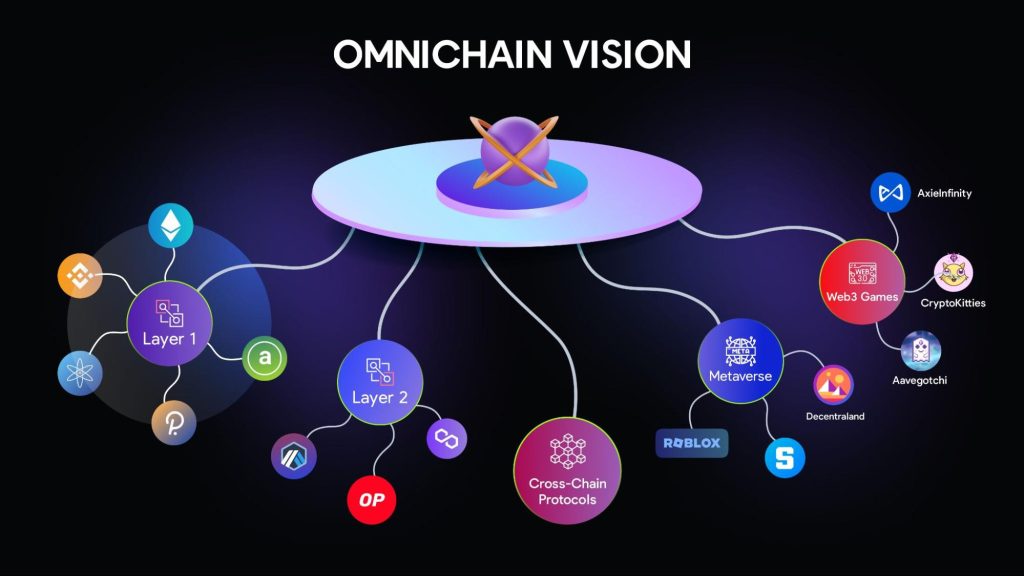
Simply put: an Omnichain Token is a Token that can natively exist across multiple chains with unified management.
There are three key points:
- It is not a bridged asset
- It is not a duplicated Token
- It operates under a unified supply system
That means no matter which chain the Token is on, it belongs to the same asset system, and the total supply is unified.
In other words, it is not “transported” across chains — it exists simultaneously across multiple chains. This is completely different from traditional cross-chain models.
To understand further, you can think of Omnichain Token as a “globally synchronized asset model.”
In traditional cross-chain models, assets are typically locked on one chain and mapped onto another. For example, a native Token is locked on the source chain, and a corresponding wrapped version is minted on the target chain. Although this enables cross-chain circulation, the asset is essentially split into multiple versions, affecting liquidity and security.
The design philosophy of Omnichain Token breaks this limitation at the architectural level. Through cross-chain communication protocols, it keeps Token states synchronized across different blockchains.
When an asset is transferred, burned, or minted on one chain, the system synchronizes updates across other chains to ensure that the total global supply remains consistent.
Therefore, when users move assets between chains, it is no longer a traditional “cross-chain transfer,” but rather a change in asset location within a unified network.
This mechanism reduces the complexity introduced by bridging and makes asset management in a multi-chain ecosystem more efficient and unified — representing an important upgrade in asset structure for the multi-chain era.
Traditional Cross-Chain Token vs. Omnichain Token
We can compare them simply:
Traditional Cross-Chain Asset:
- Asset locked on source chain
- Wrapped asset minted on target chain
- Depends on cross-chain bridges
- Exposed to bridge attack risks
Omnichain Token:
- Unified supply model
- Cross-chain synchronized state
- Does not rely on traditional lock-and-mint bridges
- More consistent asset structure
In the traditional model, the bridge is the core security component.
Each time a user moves assets cross-chain, they must lock assets in a smart contract on the original chain and mint corresponding wrapped assets on the target chain.
If the bridge’s validation mechanism, private key management, or smart contracts have vulnerabilities, large-scale asset theft can occur. Over the past few years, many major security incidents in the industry have been related to cross-chain bridges. The market has gradually realized that bridges are one of the most attack-prone components in Web3.
This is precisely why more protocols are exploring new cross-chain asset structures — and Omnichain Token emerged in this context.
Omnichain Token may become an important direction for asset issuance in the multi-chain era.
It attempts to optimize at the asset model level, no longer relying on the traditional “lock + mint” logic. Instead, it uses cross-chain communication mechanisms to allow the same Token to share a unified supply system and state across multiple chains.
When users operate across different chains, the system simply synchronizes global state instead of creating new asset copies.
The benefit is a clearer asset structure, no liquidity fragmentation, and reduced reliance on single cross-chain bridges — lowering potential systemic risk.
The Core Technical Logic of Omnichain Token
Omnichain Token is not simply deploying the same Token on multiple chains.
Many people mistakenly think that issuing Tokens with the same name on different chains achieves multi-chain assets. In reality, without unified communication and verification mechanisms, these Tokens are independent assets and not part of the same system.
A true Omnichain Token typically relies on specialized cross-chain communication systems, such as cross-chain messaging protocols. These allow blockchains to securely transmit information and states, ensuring asset data consistency across networks.
Some cross-chain infrastructures are already advancing such technologies, including LayerZero Labs, Axelar Network, and Wormhole.
Their core capability is enabling reliable information synchronization between chains.
In Omnichain Token design, the most important aspect is Token state synchronization. Instead of maintaining separate supply systems on each chain, the system updates global asset states through cross-chain messaging.
For example, when a user transfers or uses a Token on one chain, the protocol sends confirmation messages to other chains and synchronizes supply data. This may involve burning Tokens on one chain and activating or minting the same amount on another.
Through this mechanism, the entire network maintains a unified supply system, ensuring that regardless of where the asset moves, the total global supply remains consistent. This is the core value of Omnichain Token design.
A Key Advantage of Omnichain Token: Unified Liquidity
As mentioned earlier, liquidity fragmentation is a serious issue in Web3.
For example, the same Token may have deep liquidity on one chain but weak liquidity on another.
This affects:
- Trading efficiency
- Price stability
- User experience
Omnichain Token aims to solve this problem by making assets behave more like a unified market rather than fragmented assets across ecosystems.
This is especially important for DeFi.
If Omnichain Token becomes widely adopted, it could bring several important changes:
- First: Cross-chain trading becomes simpler — users no longer need frequent bridging.
- Second: Higher liquidity efficiency — capital flows more flexibly across chains.
- Third: Simpler protocol design — less cross-chain logic required.
- Fourth: Easier development of multi-chain applications — GameFi, DeFi, SocialFi all benefit.
In short: Omnichain Token may become the standard asset form of the multi-chain era.
Omnichain Token and the Future Trend: Chain Abstraction
Remember Chain Abstraction, the topic we discussed yesterday? Omnichain Token is an important component in achieving that vision.
If assets themselves are omnichain, user experience becomes extremely simple. In the future, users may not even know which chain their assets are on.
Of course, the Omnichain Token model is not without challenges.
Currently, it still faces several issues:
- Security model design
- Cross-chain communication reliability
- Synchronization latency
- Standardization
Especially in terms of security — if the cross-chain messaging layer encounters problems, the entire asset system could be affected.
Therefore, the development of Omnichain Token still depends on the maturity of cross-chain infrastructure.
Conclusion
Web3 is moving from a single-chain world toward a true multi-chain world. In this process, asset forms are continuously upgrading:
Bridged assets
- Cross-chain assets
- Omnichain Token
Each upgrade serves one purpose: making blockchain easier for users.
Omnichain Token represents a new asset structure philosophy: a Token no longer belongs to a single chain, but to the entire multi-chain network.
Perhaps this is the true endpoint of the multi-chain era.

Responses