
SuperEx Educational Series: Understanding L2 MEV

#L2 #L2MEV
When scaling is complete, power begins to redistribute.
In the final article of our Rollup series, we discussed the Fee Market. On the surface, it appears to be a matter of “transaction fees,” but the true core issue has never been Gas — it’s who decides the transaction order.
Once you understand this, the next step becomes inevitable: if transaction order can be controlled, MEV will inevitably emerge.
So, where our Rollup series ends is exactly where the L2 MEV story begins.
https://news.superex.com/articles/31399.html
L2 MEV Is Not a “Smaller Version” of L1 MEV
When people first hear about L2 MEV, they often assume:“Isn’t it just bringing MEV from Ethereum L1 onto a Rollup?” This is a very common — and very dangerous — misconception.
On L1:
- MEV mainly occurs during the block production stage
- Power is distributed among miners/validators
- The game is public and network-wide
But on L2, especially under today’s mainstream Rollup architectures:
- Blocks are produced off-chain
- Ordering power is highly concentrated in the Sequencer
- The game takes place in a more closed, localized market
As a result: L2 MEV may be smaller in scale, but it’s more controllable, more hidden, and not a weakening, but a structural transformation.
The Sequencer: Natural Center of L2 MEV
On L1, MEV is often considered a “byproduct of the system.” But on L2, it is an endogenous result of the architecture.
Why?
Because the Sequencer holds both the power of time and the power of ordering.
It can decide:
- Which transaction is executed first
- Which one gets delayed
- Which transactions get front-run
- Which opportunities are reserved for certain actors
As long as any of the following conditions exist:
- DEX arbitrage
- Liquidation triggers
- NFT minting / drops
- Airdrop interaction windows
Then MEV is no longer a question of if, but of: Who extracts it, how it’s extracted, and whether it’s shared with users.
Why L2 MEV Feels “Quieter”, Yet Is More Dangerous
You may have noticed: L2s rarely show the same intense MEV activity as L1s.
- No exaggerated gas wars
- No visible front-running
- The user experience even feels smoother
But this doesn’t mean MEV has disappeared — it’s because:
- Ordering is no longer publicly contested
- Front-running doesn’t require broadcasting to the entire network
- Many actions take place behind the scenes
In other words, L2 MEV is more like a “backdoor income” rather than a public auction. That makes it harder for users to detect — and harder to constrain.
Three Main Forms of L2 MEV
In today’s Rollup ecosystem, L2 MEV does not take just one form. As the architecture evolves, it appears in three layered forms, which may seem like different technical behaviors, but they all point to the same root issue: the centralization of ordering power.
1. Ordering MEV
This is the most intuitive and widely understood form of MEV.
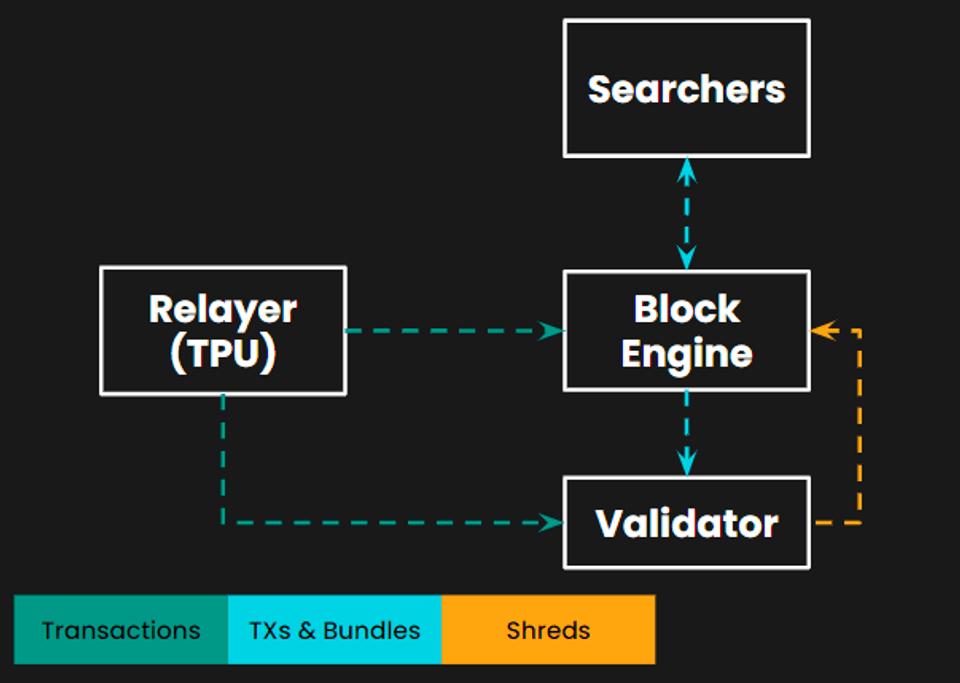
In L2s, all user transactions first enter the Sequencer’s mempool, and the Sequencer decides the final execution order. This means that if the Sequencer has the motivation and capability, it can:
- Execute high-value transactions early
- Push regular user transactions back
- Insert its own arbitrage between two user transactions
In DeFi scenarios, such reordering directly translates to real profits, for example:
- Arbitrage between price differences on DEXs
- Capturing slippage in AMM pools
- Reordering around liquidation prices
While this is similar to frontrunning or sandwiching on L1, the key difference is the competition environment:
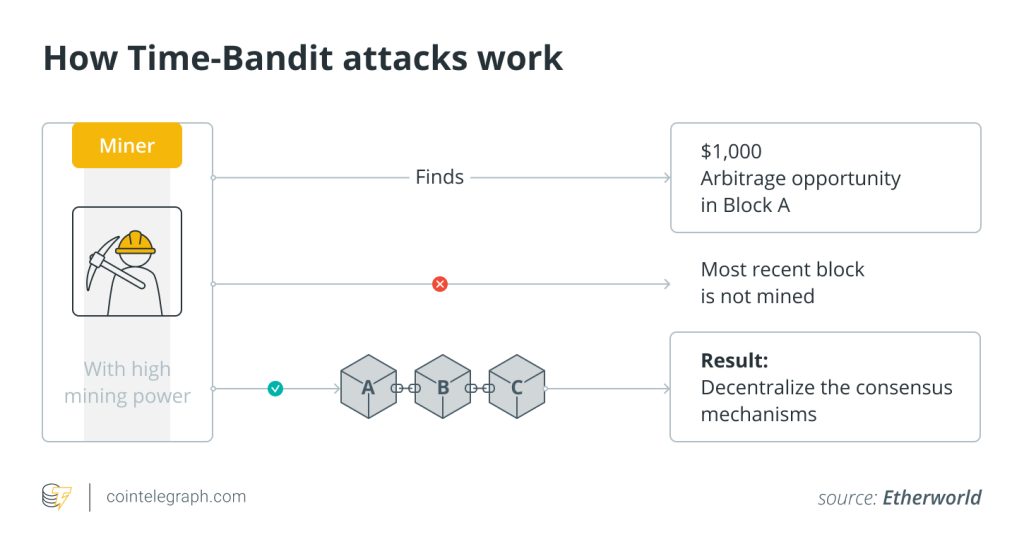
- On L1, multiple miners/validators compete to produce blocks → MEV is a public game
- On L2, ordering power is concentrated → MEV becomes an “internal decision”
The result: Users may not see an obvious gas war, but are silently paying with worse execution prices.
2. Latency MEV
If Ordering MEV is about “active frontrunning”, Latency MEV is more like “strategic delay”.
The Sequencer doesn’t have to change the order — just delay execution to create arbitrage.
For example:By delaying the on-chain posting of a large transaction, the Sequencer can first execute an arbitrage or liquidation related to it — and then submit the original transaction.
In volatile markets, even a few seconds of delay can lead to significant profits.
To the average user, this is almost invisible:
- The transaction still succeeds
- The block sequence looks “fine”
- But the price or liquidation outcome has already changed
This MEV type is easier to perform on L2s because:
- There’s no unified network-wide block timing
- Sequencers have huge freedom over when execution occurs
- Such latency is hard to prove on-chain
From a user experience perspective, Latency MEV is the most hidden yet most destructive type.
3. Whitelist MEV
This is the most controversial — and realistic — form of MEV in the L2 world.
In practice, many high-frequency traders, market makers, or professional bots bypass the public transaction pool and establish private channels with the Sequencer.
This means:
- Transactions don’t go through the public mempool
- Regular users can’t compete fairly
- Sorting and execution happen in a private environment
From an efficiency perspective, this avoids gas bidding wars and failed transactions.But from a fairness standpoint, it creates an invisible privileged lane.
More importantly, Whitelist MEV raises systemic questions:
- Does the Sequencer take a cut?
- Are MEV profits shared with the ecosystem?
- Are regular users systematically excluded?
If these questions are not addressed in protocol design, MEV turns from a technical issue into a structural asymmetry.
Can Decentralized Sequencers Truly Solve L2 MEV?
Nearly every L2 roadmap includes this phrase:“We will decentralize the Sequencer in the future.”
But here’s the key point:Decentralization ≠ elimination of MEV
It merely changes the MEV game structure. Even with multiple rotating nodes:
- Ordering power still exists
- Incentives still exist
- MEV will still be extracted
The real question is:Will MEV be absorbed into the system and publicly auctioned,Or will it continue to be privately captured?
That’s why more projects are now discussing:
- MEV Burn
- MEV Sharing
- Fair Ordering
- User protection mechanisms
Instead of simply chanting “decentralization.”
From L1 to L2: MEV Is Becoming a “Systemic Issue”
Looking back, the evolutionary logic is clear:
- L1 solved “security and consensus”
- Rollups solved “scalability and cost”
- L2 MEV is about power and distribution
This is why MEV is no longer a technical side note — it’s a core variable in protocol design.
In the L2 era, a truly mature system isn’t one with no MEV, but one that can:
- Acknowledge its existence
- Set boundaries
- Redistribute benefits to users or the ecosystem
Conclusion: After Scaling, the Real Battle Begins
Rollups made blockchain faster and cheaper.But they also concentrated power.
MEV is the clearest reflection of that shift.Understanding L2 MEV isn’t about fear — it’s about facing a truth:After performance improves, the real competition happens where you can’t see it.

Responses