
SuperEx Educational Series: Understanding Genesis Block and Why Does Blockchain Need a Starting Point

#SuperEx #EducationalSeries #Blockchain
We have some exciting news to share — our educational series has officially reached its 401st edition. Over the first 400 installments, we’ve covered everything from blockchain fundamentals, technical architecture, and core mechanisms to cross-chain technology, Data Availability (DA), MEV, governance, AI, and countless other Web3 concepts, taking readers from the basics to advanced topics.
As we enter this new chapter, we’re also launching a brand-new “Blockchain Knowledge System.” Instead of focusing solely on individual technical terms, we’ll expand into the broader structure of the industry, including ecosystem architecture, product models, operational workflows, asset lifecycles, user behavior, market structure, development processes, project lifecycles, and the connections between the on-chain world and the real world.
Simply put, we’re no longer limiting ourselves to explaining “what something is.” Instead, we’ll answer questions like: “How does it actually work in the real world?” and “Why does it work this way?” This new learning path will take you through the complete blockchain journey — from how blockchain networks operate, how data is generated, how digital assets exist, how wallets manage those assets, how DApps function, how tokens enter the market, and ultimately how markets discover prices.
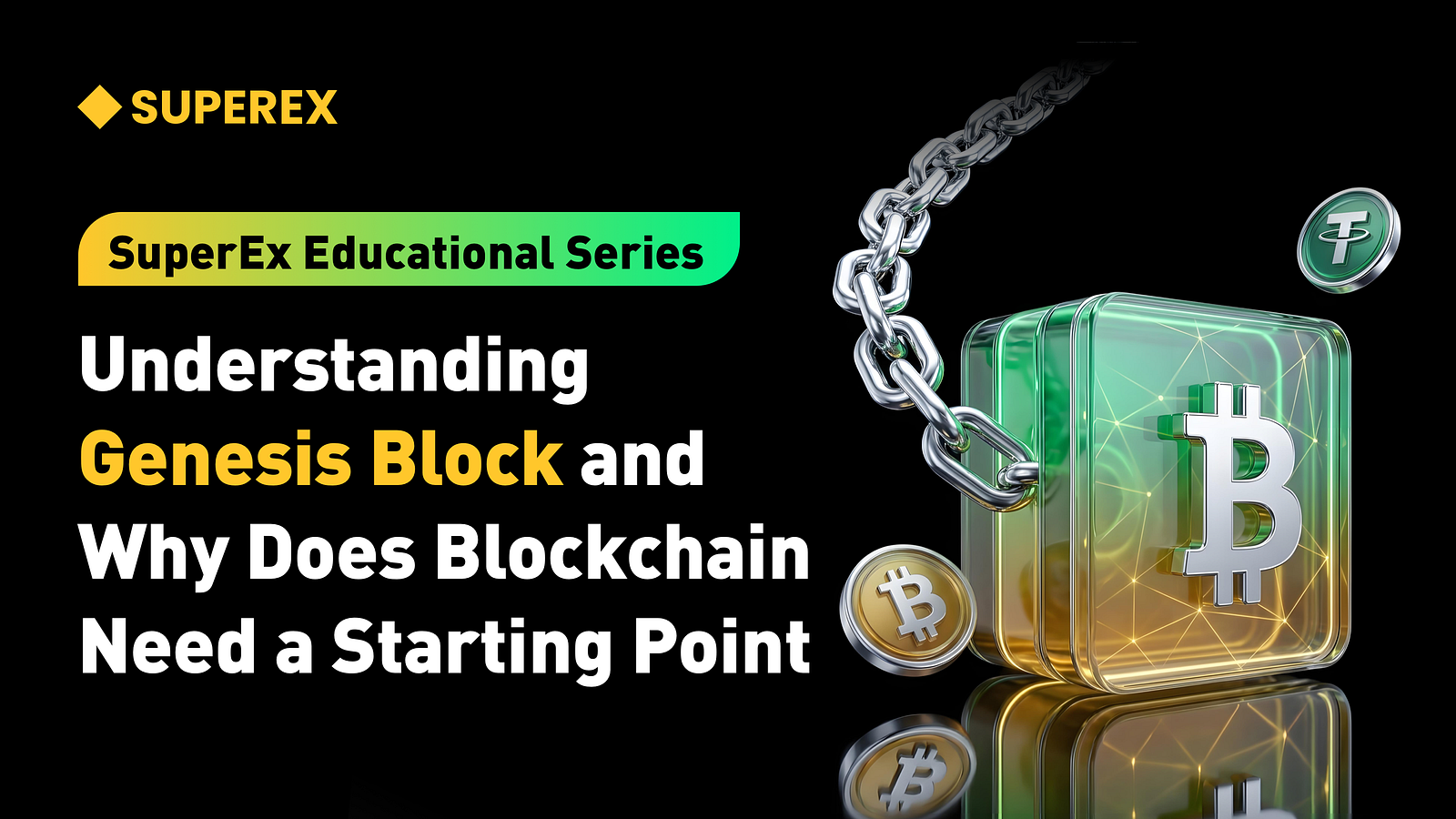
Many people hear “Genesis Block” and imagine something mystical, like the Big Bang of blockchain. A developer types the first line of code, and the world begins. Sounds dramatic, but in plain English, the genesis block is basically the first page of a ledger.
The key is that this first page matters a lot. Without page one, page two has nowhere to attach. Without a starting point, nodes do not know which chain they are joining. Without an initial state, assets, accounts, transactions, and future blocks have no shared reference.
The Genesis Block is the first block of a blockchain, usually at block height 0. It does not have a normal previous block, so it becomes the starting point of the entire chain history.
Normal blocks reference the hash of the previous block. Block 100 references block 99, block 101 references block 100, and so on. This is how blocks become a chain.
But the genesis block has no predecessor. It does not attach to anything before it. Instead, all nodes agree: this is where the chain begins. So it is not only the first record; it is the shared anchor of the network.
In one sentence: the Genesis Block is the initial anchor of a blockchain.
Concept Interpretation
A blockchain is not a random pile of data. It is a state machine that runs in order.
Each new block changes blockchain state. In Bitcoin, state is mainly represented by UTXOs, meaning which transaction outputs remain unspent. In Ethereum, state includes account balances, nonces, contract code, and contract storage. Transactions are not isolated events; they update state step by step.
So here comes the question: what existed before step one?
That is what the genesis block answers. It defines the starting history, initial parameters, and initial state of the chain. Different blockchains include different information in their genesis setup, but the meaning is the same: everyone starts accounting from the same place.
Without this starting point, nodes cannot independently verify history. Verifying a blockchain is not only checking today’s balance. It means starting from the earliest state, executing valid transactions step by step, and arriving at today’s state.
Why Does Blockchain Need a Starting Point?
First, a hash chain needs an anchor.
Every block references the hash of the previous block, creating continuity. If someone changes an old block, all following hashes change. The Bitcoin whitepaper’s core idea is to place transactions into a hash-based proof-of-work chain, creating a chronological record that is hard to rewrite.
Second, a state machine needs an initial state.
Assets do not float in the air. In Bitcoin, coins enter circulation through coinbase transactions and block rewards. In Ethereum, the launch used a genesis configuration to define initial account balances. Asset models differ, but every chain must answer: what did the ledger look like at the beginning?
Third, consensus needs a shared reference.
If two nodes have different genesis blocks, they are not on the same chain. Even if the software and transaction format are the same, different starting points lead to different hashes, states, and histories. If two people claim to read the same book but page one is different, the conversation is already broken.
Fourth, network identity needs distinction.
Mainnets, testnets, private chains, and forked chains may use similar code, but they are distinguished by different genesis configurations, chain parameters, network IDs, or chain IDs. The genesis block is like the first identity page of the network.
Fifth, verification needs traceable history.
Blockchain security comes from the ability to verify independently. Nodes do not simply trust someone’s claimed balance. They check blocks, transactions, signatures, state transitions, and consensus proofs according to rules. The genesis block is where that verification path begins.
How Blockchain Runs After Genesis
First comes the genesis block. Normal blocks come after it.
A user creates a transaction, such as a transfer, contract call, NFT mint, or order submission. The transaction is broadcast to the network and enters the transaction pool seen by nodes. Miners or validators select transactions and package them into a new block.
The new block states which parent block it follows, which transactions it contains, what state change results from execution, and what its block header hash is.
Other nodes do not simply accept the new block. They re-check: is the parent block correct, are transaction signatures valid, are balances sufficient, is gas valid, does the state transition match, and are consensus rules satisfied?
If validation passes, nodes attach the new block to their local chain and update state. Then the next round begins. This is how blockchain moves forward block by block: not because a central server says so, but because nodes repeatedly verify according to the same rules.
What Is Inside a Genesis Block?
Different blockchains design this differently, but a genesis block or genesis configuration usually contains several types of information.
First is block header information, such as timestamp, difficulty parameters, gas limit, extra data, and parent hash. Since there is no parent block, the genesis block’s parent hash is usually a special value.
Second is initial state. This may include which addresses have balances at launch, which accounts or contracts exist, and how system parameters are set. During Ethereum’s early Frontier launch, users generated and loaded the genesis block containing ether sale allocations, making it the common starting point of the network.
Third is chain configuration. This can include consensus parameters, upgrade activation rules, network identifiers, and block parameters. Strictly speaking, some rules live in client software, and some live in the genesis configuration. Together, they tell nodes how to judge whether a chain is valid.
Bitcoin and Ethereum Cases
Bitcoin’s genesis block was created on January 3, 2009. It opened Bitcoin’s chain history and became the earliest anchor referenced by later blocks. The block also included a famous newspaper headline, pointing to the financial context of the time and giving the technical starting point a historical marker.
But the more important part is not the story; it is the mechanism. Every valid Bitcoin block after genesis must attach to the existing chain and satisfy proof-of-work and transaction validity rules. Assets exist in the UTXO system, where transactions spend old outputs and create new outputs.
Ethereum’s genesis block is closer to an initial state file. It is not only “the first block”; it defines account balances and the starting network state. After that, each new block executes transactions and changes accounts, balances, contract storage, and global state.
This explains why a blockchain is not just a database. A database can directly edit a balance row. A blockchain asks: where did this balance come from, through which transactions, in which blocks, and can it be verified from genesis to now?
Common Misunderstandings
The first misunderstanding: the genesis block creates all coins.
Not necessarily. Bitcoin did not issue all BTC in the genesis block; BTC entered circulation over time through block rewards. Ethereum and other chains may pre-allocate balances in the genesis state. Different chains use different issuance models.
The second misunderstanding: the genesis block can be changed casually.
You can modify your local genesis configuration, but that basically creates a different chain. The original network will not follow your edited first page. Changing genesis is not editing history; it is starting a new network.
The third misunderstanding: a more complex genesis block is more advanced.
Wrong. A genesis block should be clear, verifiable, and reproducible. Complex pre-allocations, hidden rules, and opaque parameters increase trust cost. The first block is not for showing off; it is for establishing a shared starting point.
The fourth misunderstanding: having a genesis block means the system is fully decentralized.
Not necessarily. The genesis block is only the technical starting point. Decentralization depends on node distribution, client diversity, consensus design, governance, token distribution, validation barriers, and whether the community can run independently.
Risks and Design Questions
The first risk is initial allocation. If genesis allocation is too concentrated, the ecosystem may carry fairness problems from day one. On-chain transparency does not automatically mean social acceptance.
The second risk is opaque configuration. If the genesis configuration includes critical parameters without clear explanation, node operators and users may not understand what network they are joining.
The third risk is client inconsistency. If different clients interpret genesis state or rules differently, consensus splits may happen. A blockchain’s dangerous moment is when people think they agree, but machines execute differently.
The fourth risk is social consensus. A genesis block does not work only because of code. A public chain launches because enough people accept its starting point, rules, and issuance arrangement. Behind technical consensus, there is also social consensus.
Conclusion
The core value of the Genesis Block is giving a blockchain a starting point recognized by all nodes.
It gives blocks a place to start linking, state a place to start evolving, assets an initial reference, nodes a shared history, and verification a first step.
From this article onward, we are also entering a new path for understanding blockchain operations: first, where the chain begins; then how data is produced, how assets exist, how wallets manage ownership, how DApps run, how tokens enter markets, and how prices form.
In plain words: the genesis block is not decorative blockchain mythology. It is the first nail of the system. Without it, later blocks, transactions, assets, state, and consensus have no shared origin. A chain can go very far, but it must first know where it starts.
About SuperEx
As the world’s first Web3-powered cryptocurrency exchange, SuperEx has remained committed to building the Web3 ecosystem. Over the years, it has introduced a comprehensive range of products and services, including SuperEx DAO, SuperEx Web3 Wallet, Super Start, SuperEx P2P, SuperEx Stock Markets, SuperEx Copy Trading, SuperEx Earn, and SuperEx DAO Academy, creating a full-spectrum ecosystem that spans every major sector of Web3.
Today, SuperEx serves over 10 million users, with a social media community of more than 600,000 followers across 166 countries and regions worldwide. The platform supports 1,000+ cryptocurrencies for both spot and futures trading. Seamlessly integrated with Super Wallet, SuperEx provides decentralized asset custody while combining the trading efficiency of a centralized exchange (CEX) with the security of a decentralized exchange (DEX).
Click to register SuperEx
Click to download the SuperEx APP
Click to enter SuperEx CMC
Click to enter SuperEx DAO Academy — Space





Responses