
SuperEx Educational Series: Understanding Social Graph Protocol

#SuperEx #EducationalSeries
There is something awkward about internet social networks: you spend years following people, posting content, gaining followers, and building relationships. But do you really own those connections?
Often, the answer is uncomfortable. The account looks like yours, the relationships look like yours, and the content looks like yours. But once the platform changes rules, bans an account, or turns off distribution, you realize your social assets were closer to rented property than real ownership.
A Social Graph Protocol solves this problem by taking relationships, content interactions, and social identity out of one platform’s private database and turning them into verifiable, portable, and composable network infrastructure.
What Is a Social Graph Protocol?
A Social Graph Protocol is a protocol for recording, managing, and using social relationship networks. It describes who an identity is, who follows whom, who interacts with whom, who belongs to which group, who published what, and how these relationships can be read and used by different applications.
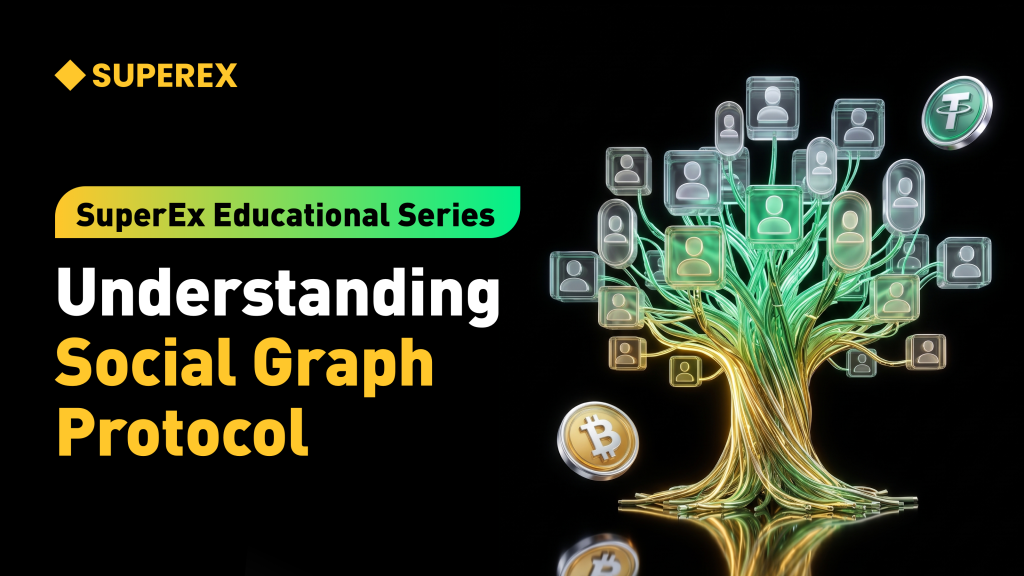
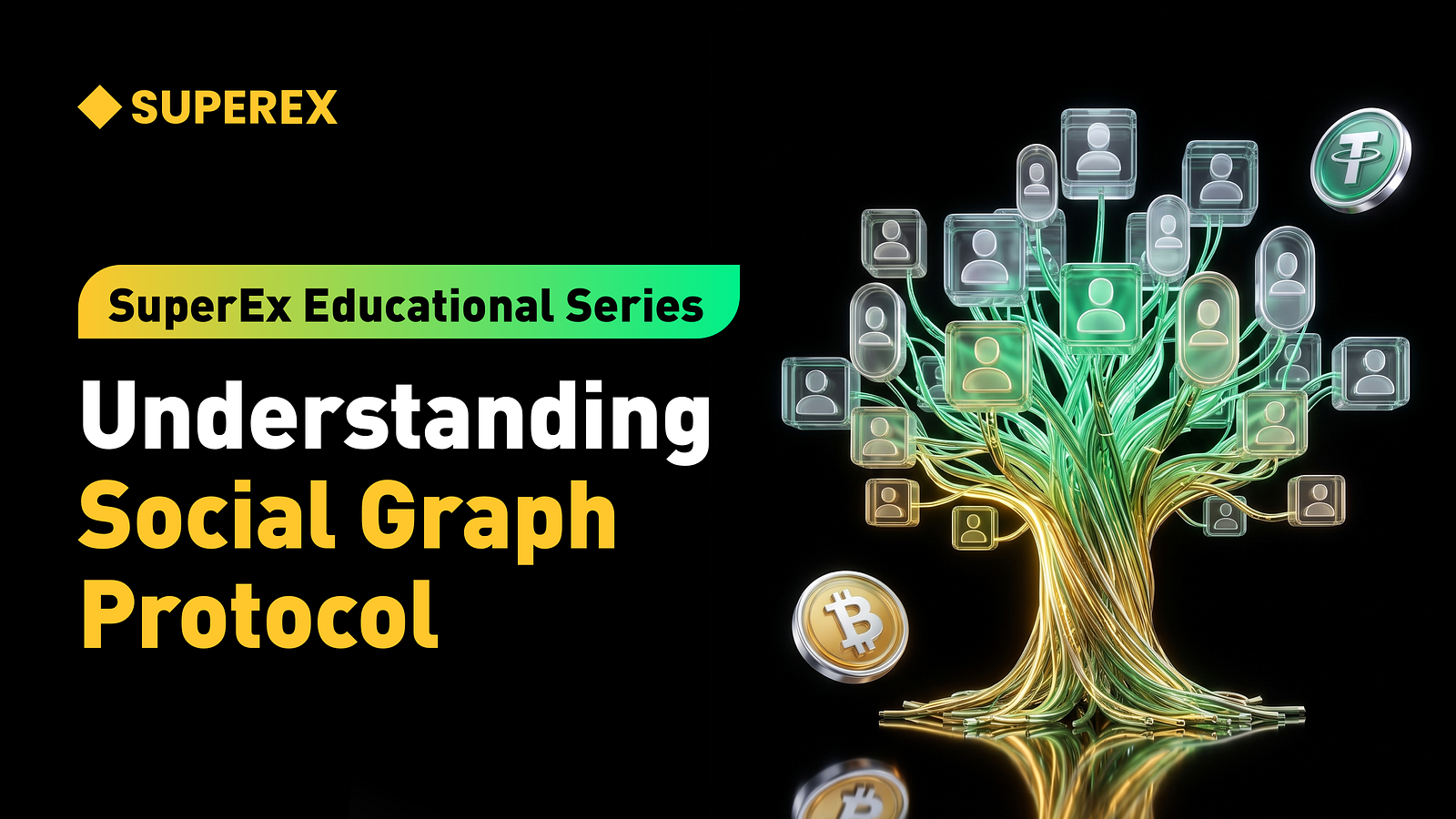
Here, “graph” does not mean an image. Nodes can be users, wallets, DIDs, smart accounts, content, groups, agents, projects, or datasets. Edges can be follows, friendships, likes, comments, reposts, collects, subscriptions, memberships, trust links, permissions, or contributions.
In one sentence: a Social Graph Protocol is the relationship data layer of Web3.
Concept Interpretation
The problem with Web2 social platforms is not that they lack social graphs. The problem is that the graph is locked inside the platform.
You may follow 500 people on one platform, but when you move to another app, you start from zero. You build reputation in one community, then become a new account somewhere else. Developers also suffer because user relationships are controlled by large platforms. New apps struggle with cold starts, users struggle with migration, and developers struggle with growth. Everyone suffers equally, which is fair, but unnecessary.
The core idea is turning relationship networks from platform-owned assets into user-portable assets. Users can carry identity, relationships, content history, and social reputation across applications. Apps no longer need to build networks from zero; they can create different experiences on top of a shared open graph.
But this is not just “moving a follow list.” A real Social Graph Protocol must solve identity, signatures, storage, indexing, permissions, privacy, anti-spam, governance, and data availability. It looks like social media, but underneath it is infrastructure.
How Does It Work?
First is the identity layer.
The protocol must define who is speaking. The identity may be a wallet address, DID, smart account, Farcaster ID, Lens Account, CyberAccount, or app-level account. W3C DID standards emphasize user-controlled digital identifiers, which is the foundation for portable social identity.
Second is relationship writing.
When a user follows, unfollows, joins a group, posts, likes, or comments, the system creates a signed message, on-chain transaction, event stream, or data update. Farcaster uses signed messages and Hubs to synchronize a message-graph. Lens provides composable social primitives such as Accounts, Graphs, Feeds, and Groups.
Third is storage and synchronization.
Social data is huge. If every like and comment goes to a main chain, costs explode. Different protocols choose different models: some data on-chain, some in decentralized storage, event streams, Hubs, indexers, or graph databases. Ceramic focuses on decentralized event streaming for composable data networks.
Fourth is indexing and querying.
Raw data is not automatically usable data. Apps need fast queries like “who do I follow,” “who follows me,” “which posts are from my network,” and “what is this user’s social reputation?” So Social Graph Protocols usually need indexers, GraphQL APIs, node sync, and caching layers.
Fifth is rules and permissions.
Not every relationship should be completely open. Lens Rules let developers set conditions for follows, posts, comments, and group membership, such as free connections, paid connections, token gating, or approval flows. In plain words: open social does not mean no rules. It means rules should be transparent, composable, and verifiable.
Why It Matters
A Social Graph Protocol matters because social relationships are a network asset.
For users, it means identity and relationships are no longer fully dependent on one app. You can switch clients and keep your network. You can enter a new community and still carry your history. You can connect different wallets, DIDs, or accounts through authorization and mapping.
For developers, it reduces cold-start problems. A new app does not need to ask users to follow everyone again. It can read an existing graph and innovate on product design, content discovery, algorithms, communities, and monetization.
For Web3, it gives a relationship foundation to reputation layers, agent authorization, data marketplaces, DAO governance, SocialFi, on-chain content, and risk systems. Without a graph, systems only see isolated addresses. With a graph, they can understand relationships, context, and behavior history.
Technical Architecture
The first layer is identity.
It handles accounts, keys, DIDs, wallet binding, usernames, and recovery. Farcaster puts identity registration and key mapping on-chain. Lens uses Accounts as portable identity. Cyber combines CyberAccount with social primitives.
The second layer is the graph layer.
It defines nodes and edges. A follow is an edge, content interaction is an edge, and group membership is also an edge. The graph design determines how complex the social experience can become.
The third layer is data.
It decides where data lives, how it updates, and how it is verified. Farcaster uses Hubs and CRDT concepts for eventual consistency. Ceramic uses decentralized event streams and DID authentication. CyberConnect’s earlier design emphasized user signatures, IPFS/Ceramic storage, and verifiable updates.
The fourth layer is indexing.
Users do not directly read raw events. Apps need relationships organized into queryable data, such as follower lists, mutual follows, interaction strength, recommendation candidates, group members, and content ranking.
The fifth layer is the application layer.
Different clients can build different experiences on the same graph: short posts, long-form content, live streams, communities, trader following, DAO collaboration, educational tasks, and agent marketplaces. Same graph, different products.
A Simple Case
Suppose SuperEx builds a Web3 education and trading community. Users can follow researchers, collect courses, join DAO groups, subscribe to strategy creators, rate data contributors, and authorize AI agents to recommend content based on their social relationships.
In a traditional platform model, all these relationships sit inside SuperEx’s private database. If users move to another app, the relationships disappear. Other developers cannot compose with them. Learning records, contribution history, and social reputation are hard to reuse.
With a Social Graph Protocol, follows, memberships, subscriptions, contributions, and reputation signals can become a verifiable graph. SuperEx Academy can read learning relationships, DAOs can read contribution relationships, risk systems can read trusted interactions, and AI agents can use authorized graph data instead of recommending blindly.
More importantly, users are not necessarily locked into one interface. A user may follow a researcher in SuperEx Space today and see parts of that relationship or content context in another Lens-, Farcaster-, or Cyber-like app tomorrow. Social assets begin moving from platform data to user networks.
Common Misunderstandings
The first misunderstanding: a Social Graph Protocol is just decentralized Twitter.
Wrong. Twitter is an application. A Social Graph Protocol is the relationship layer underneath. It can support social media, DAOs, games, education, trading communities, agent networks, and reputation systems.
The second misunderstanding: all social data should be on-chain.
Not so fast. Social data is high-frequency, large-scale, and privacy-sensitive. A better design usually puts key identity, permissions, proofs, and settlement on-chain, while content, interactions, and indexes use more suitable storage and sync layers.
The third misunderstanding: owning the graph means owning distribution.
Not necessarily. You may own relationship data, but recommendation, ranking, moderation, and distribution are still handled by different apps. Owning the graph gives portability, not automatic reach.
The fourth misunderstanding: decentralized social means no moderation.
Also wrong. The question is not whether moderation exists, but who sets the rules, whether rules are transparent, whether users can choose clients, and whether they can take identity and relationships elsewhere. A social network with no governance may simply make spam more free.
Risks and Limitations
The first risk is privacy.
Social relationships are sensitive. Who follows whom, who interacts with whom, and who joins which group can reveal preferences, profession, asset interests, or risk profiles. Public graphs should not expand blindly; privacy and selective disclosure matter.
The second risk is spam and automation.
Open graphs can be filled with fake follows, fake interactions, and fake reputation. Social Graph Protocols need human verification, Proof of Personhood, reputation layers, and anti-spam systems.
The third risk is indexer centralization.
Even if base data is open, if most users rely on one API or one indexer, the practical experience can still be controlled by a centralized gateway. Open data also needs open indexing and alternative clients.
The fourth risk is data availability.
Owning data does not mean it is always available. Content storage, node syncing, pinning, backups, migration, and recovery all matter. Otherwise, ownership exists in theory but fails in practice.
The fifth risk is semantic confusion.
Following, friendship, trust, subscription, endorsement, and collaboration are not the same. If a protocol compresses all relationships into one “follow,” advanced applications lose meaning.
Conclusion
The core value of a Social Graph Protocol is releasing social relationships from platform-owned databases and turning them into user-controlled, application-composable, and network-verifiable infrastructure.
It is not a social app, and it is not just a follow list. It is a protocol layer connecting identity, relationships, content, permissions, storage, indexing, and reputation.
Future Web3 social apps, education platforms, trading communities, DAOs, AI agents, data markets, and reputation systems will increasingly depend on social graph protocols. A truly open network should not force users to restart their identity every time they switch apps, and it should not force developers to start from zero forever.
In plain words: a Social Graph Protocol is not just another place to post updates. It means your relationships, identity, and social value no longer belong only to one platform. In the old model, you socialized inside platforms. In the next model, platforms connect to your social network.
About SuperEx
As the world’s first Web3-powered cryptocurrency exchange, SuperEx has remained committed to building the Web3 ecosystem. Over the years, it has introduced a comprehensive range of products and services, including SuperEx DAO, SuperEx Web3 Wallet, Super Start, SuperEx P2P, SuperEx Stock Markets, SuperEx Copy Trading, SuperEx Earn, and SuperEx DAO Academy, creating a full-spectrum ecosystem that spans every major sector of Web3.
Today, SuperEx serves over 10 million users, with a social media community of more than 600,000 followers across 166 countries and regions worldwide. The platform supports 1,000+ cryptocurrencies for both spot and futures trading. Seamlessly integrated with Super Wallet, SuperEx provides decentralized asset custody while combining the trading efficiency of a centralized exchange (CEX) with the security of a decentralized exchange (DEX).
Click to register SuperEx
Click to download the SuperEx APP
Click to enter SuperEx CMC
Click to enter SuperEx DAO Academy — Space


Responses