
SuperEx Guide: Spot Market Trading Course(VI)

备份-4@2x-1024x576.png)
In the world of cryptocurrency trading, you’ve probably heard the term “grid trading” many times, especially in the spot market. Many people call it a “set-it-and-forget-it” tool. Some use it to steadily earn profits from price differences, while others rely on it to stay calm during volatile, sideways markets. But what exactly is it? How does it work? And who is it suitable for? Today, we’re bringing you an in-depth guide that explains everything you need to know about spot grid trading.
备份-4@2x-scaled.png)
What Is Spot Grid Trading?
Spot grid trading is a classic quantitative trading strategy that many people consider extremely beginner-friendly. Its logic is simple: within a price range you set in advance, your funds are divided into smaller portions across multiple price levels, and the system automatically places orders at each level.
When the price falls, the system buys according to your grid settings. When the price rises, it automatically sells part of the position. It’s like repeatedly picking up money from market fluctuations. You don’t need to watch the chart all day—the system automatically completes the cycle of buying low and selling high for you.
Here’s a simple real-life example. Imagine casting a fishing net into a river. The net is divided into many small sections, and each section is ready to catch fish. As the water level—the market price—rises and falls, fish—trading opportunities—swim through and are automatically caught by the net.
You don’t need to sit by the river all day, nor do you have to catch every fish yourself. The grid does the work for you.
The appeal of spot grid trading is that it works particularly well in range-bound markets. Most people know that when a token’s price moves sharply in one direction, either upward or downward, accurately identifying the best entry and exit points is extremely difficult. It tests both your trading skills and your emotional discipline.
However, in a sideways market, prices frequently move back and forth. Although there may appear to be no clear trend, this environment often provides the most trading opportunities. Spot grid trading takes advantage of these repeated fluctuations and turns each price movement into actual profit.
More importantly, it helps investors solve one major problem: emotional trading.
Many traders miss the best opportunities or repeatedly buy high and sell low because of greed and fear. With grid trading, all buying and selling actions are handled automatically by the system. You only need to set the parameters in advance, allowing the strategy to generate profits mechanically without emotional interference.
Overall, spot grid trading is like setting an automated trap for market opportunities. It won’t make you rich overnight, but it can help you continuously earn price-spread profits in a sideways market, turning “boring consolidation” into “steady returns.”
The Basic Principles of Grid Trading
Grid trading is widely used in the spot market because it divides a selected price range into multiple smaller intervals based on predefined mechanical rules, allowing the system to execute trades automatically.
For example, suppose you believe BTC will fluctuate between $60,000 and $65,000. You can set this range as your trading zone.Next, you decide how many grids to divide it into. Let’s say you choose 25 grids. Each grid would then represent a price interval of $200.Your funds are distributed across these grid levels.If BTC falls from $65,000 to $64,800, the system automatically places a buy order at the corresponding grid level. If the price then rebounds to $65,000, the system automatically sells the BTC purchased earlier.
The entire process works like a set of interlocking gears. As long as the price continues moving up and down, the strategy can repeatedly buy low and sell high.
The key points are:
- Mechanical execution of buying low and selling high: Human traders are easily influenced by panic and greed, often leading them to chase rising prices and sell during declines. Grid trading follows preset rules and does not make emotional mistakes.
- Diversified capital and diversified risk: Since funds are distributed across different grid levels, the strategy avoids extreme situations such as entering a full position all at once or placing a single oversized order. Capital utilization is more balanced.
- Repeated arbitrage cycles: After each purchase, the system places a sell order at a higher grid level. After each sale, it places a new buy order at a lower grid level. It works like an automated relay race, allowing the strategy to continue operating.
In other words, the logic behind spot grid trading is not to “predict the market,” but to “use the market.”Whether the price moves upward or downward in the short term, as long as it continues fluctuating within your selected range, the strategy can keep accumulating profits from the price differences.
If trading were like hunting, traditional manual trading would be like holding a rifle and constantly watching your target, always nervous about missing the right moment.
Grid trading, on the other hand, is like setting a row of traps in the forest. No matter when the prey appears, the traps can capture it automatically.
Of course, grid trading is not perfect. It works best in sideways or gradually fluctuating markets.If the price rises or falls sharply in one direction, the grid’s buying and selling rhythm may become unbalanced. For example, during a one-way rally, the system may sell all its holdings too early and fail to buy them back. During a prolonged decline, it may continue buying and become trapped at higher price levels.
That’s why choosing a reasonable price range and grid count is essential to making the strategy effective.
In summary, spot grid trading works by dividing a price range, placing orders automatically, and repeating the trading cycle. It turns volatility into a source of profit rather than an enemy.
Advantages of Spot Grid Trading
Why is spot grid trading so popular? The reason is that it offers several clear advantages:
- Capturing Opportunities in Sideways Markets
Most of the time, the cryptocurrency market is not experiencing a dramatic one-way rally or crash. Instead, prices move up and down within a range.
Spot grid trading is designed for this type of environment, turning fluctuations into real profits.
- Automated and Hassle-Free
You don’t need to constantly monitor the market or worry about emotional trading.
The system automatically executes trades according to your settings, making it especially suitable for full-time employees or investors who don’t have much time to watch charts.
- Relatively Controllable Risk
Because this is a spot grid strategy rather than a futures grid strategy, there is no liquidation risk.
In the worst-case scenario, a falling token price may result in unrealized losses, but you still own the tokens. Your position will not be liquidated and reduced directly to zero.
- High Flexibility
You can stop the strategy at any time and withdraw your tokens or funds.
You can also adjust the price range, grid count, capital allocation, or switch to a different token based on changing market conditions.
Risks and Limitations of Spot Grid Trading
Of course, no strategy can guarantee profits without losses. Spot grid trading also has certain risks and limitations.
- Risk of a One-Way Decline
If the token price continues falling and drops below the lower limit of the grid range, the system may keep buying without being able to sell.
As a result, your funds may become tied up in positions purchased at higher prices. Although you won’t be liquidated, your capital may remain locked for a long period.
- Missing Out During a One-Way Rally
If the token price rises sharply and moves above the upper limit, the strategy may sell all your assets too early.
You may then miss out on further gains.
- Patience Is Required
Grid profits come from repeated price fluctuations.
You may not see significant returns in the short term, and the strategy often needs to run for an extended period before its effectiveness becomes visible.
- Trading Fee Costs
Each grid transaction may generate only a small profit, but frequent trades can cause fees to accumulate.
Choosing a platform with lower trading fees is therefore beneficial. SuperEx, for example, provides a relatively low-cost trading environment for grid traders.
How to Start Spot Grid Trading on SuperEx
Since grid trading can be so useful, how exactly do you use it? Below is a detailed step-by-step guide.
Step 1: Choose a Trading Pair
It is generally recommended to choose assets with strong liquidity and sufficient volatility, such as BTC/USDT, ETH/USDT, or other popular high-volatility tokens.
Step 2: Set the Price Range
You can determine the range based on current market trends.For example, if ETH is currently trading at $4,300 and you expect it to fluctuate between $4,800 and $5,000 in the future, you can use that range for your grid strategy.
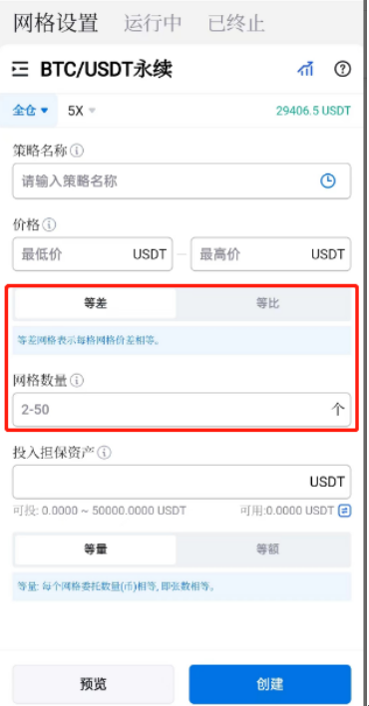
Step 3: Set the Number of Grids
The more grids you create, the smaller the price interval between each grid and the more frequently the system will trade. However, the profit per trade will be lower.The fewer grids you create, the higher the profit per trade, but the lower the trading frequency.Beginners are generally advised to use between 50 and 100 grids.
Step 4: Invest Funds
Allocate funds according to your own risk tolerance. Do not blindly invest everything at once.You can begin with a smaller amount, such as 1,000 USDT.
Step 5: Start the Strategy
Click “Start,” and the system will automatically allocate your funds and place the required orders.From that point onward, you can sit back and wait for the strategy to generate profits from price differences.
Practical Tips and Recommendations
- Set a Reasonable Price Range
- If the range is too narrow, the price may break out easily.
- If the range is too wide, capital efficiency may be too low.
It is best to set the range by referring to recent support and resistance levels.
- Token Selection Matters
Try to choose major cryptocurrencies or mainstream assets with strong liquidity.Avoid low-liquidity small-cap tokens, as their orders may be difficult to execute.
- Allocate Capital Conservatively
Do not place all your funds into a single grid strategy.It is best to keep part of your capital in reserve.
- Be Patient and Avoid Frequently Stopping the Strategy
Grid strategies need time to operate.Frequently starting and stopping them may reduce overall returns.
- Maintain a Long-Term Perspective
Grid trading is not designed to generate huge short-term profits.Its goal is to accumulate stable returns over time.
Complete Glossary of Spot Grid Trading Terms
- Grid
A grid is the core concept of spot grid trading.Simply put, the selected price range is divided into multiple evenly spaced price levels, with each level representing one grid.At every grid level, the system automatically places a buy or sell order, creating a repeated cycle of buying low and selling high.
- Number of Grids
This refers to the number of grid levels created within your selected price range.For example, if the BTC price range from $110,000 to $120,000 is divided into 50 grids, the interval between each grid will be $200.
Tips:
- The denser the grids, the more trades the strategy may execute and the more potential sources of profit it creates. However, trading fees will also increase.
- If the grids are too widely spaced, the strategy may miss short-term profit opportunities.
- Price Range
This refers to the upper and lower price limits within which the grid strategy operates.For example, a BTC grid strategy may operate between $110,000 and $120,000.If the price moves outside the range, the strategy may either miss further gains or leave positions trapped at higher prices.
Recommendation: Set the range based on the token’s historical volatility and the current market trend to prevent the price from remaining outside the selected range for too long.
- Automatic Order Placement
Automatic order placement is the heart of a grid strategy.The system places buy and sell orders at each grid level without requiring manual intervention.
How it works:
- After a buy order is executed, the system automatically places a sell order at the next higher grid.
- After a sell order is executed, the system automatically places a buy order at the next lower grid.
- This cycle continues until the strategy is stopped.
- Unrealized Profit
Unrealized profit refers to gains generated during the strategy that have not yet been realized through an actual sale.
Reminder: Unrealized profit changes with market fluctuations and cannot be withdrawn directly. It only becomes realized profit after the asset is sold.
- Realized Profit
Realized profit refers to the actual profit generated from completed trades during the strategy.
Tip: You can review the grid strategy’s accumulated realized profit at any time to evaluate its performance.
- Buy Price/Sell Price
- Buy price: The price at which the system places an order to purchase an asset.
- Sell price: The price at which the system places an order to sell an asset.
The core of grid trading is earning profits by buying low and selling high. The buy and sell prices of every grid are therefore essential to calculating returns.
- Invested Capital
This refers to the total amount of funds allocated to the grid strategy.
Recommendations:
- Beginners can use 10%–20% of their total capital to test the strategy and avoid full-position risk.
- The system distributes the funds among the different grid levels based on the selected number of grids.
- Capital per Grid
This refers to the amount of capital allocated to each grid.For example, if the total invested capital is $10,000 and the strategy uses 50 grids, approximately $200 will be allocated to each grid.
Purpose: This ensures each grid has sufficient capital to execute trades and prevents situations where the strategy does not have enough funds or assets to place an order.
- Take Profit/Stop Loss
- Take profit: When the strategy reaches a preset profit target, it automatically sells the position to lock in gains.
- Stop loss: When losses reach a preset percentage, the strategy automatically closes the position to limit further losses.
Importance: These tools help control risk and protect overall capital during extreme market volatility.
- Grid Spacing
Grid spacing refers to the price difference between two adjacent grid levels.
Strategy tips:
- If the spacing is too wide, the strategy may miss short-term fluctuations, although trading fees will be lower.
- If the spacing is too narrow, the strategy may generate more trades, but fee costs will also increase.
- Capital Allocation Ratio
This refers to the percentage of total capital allocated to each order.Properly controlling the capital allocation ratio can reduce the risk caused by a single price movement.
- Range Breakout
A range breakout occurs when the market price moves above or below the selected grid range.When this happens, the strategy may stop operating effectively or require manual adjustment.
Possible responses:
- Upward breakout: You may miss further gains. Consider adjusting the range or raising the upper limit.
- Downward breakout: Your position may become trapped. Consider setting a stop loss or lowering the bottom of the range.
- Strategy Cycle
A strategy cycle refers to one complete sequence of buying, selling, and then buying again.
The strategy’s profitability is closely related to the frequency of market fluctuations. The more frequently the market moves, the more cycles the strategy completes and the faster profits can accumulate.
- Compound Grid
A compound grid reinvests realized profits into the grid strategy to increase the strategy’s size and potential returns.
Feature: Both risk and potential returns are amplified, making it more suitable for experienced investors.
Conclusion
At its core, spot grid trading is a mechanical strategy built around buying low and selling high.It works best in sideways markets and can help you automatically earn profits from price fluctuations. It is particularly suitable for investors who prefer relatively stable returns and do not want to monitor the market every day.Although it is not risk-free, spot grid trading can be an extremely useful tool when the price range is set reasonably and the right assets are selected.
On SuperEx, spot grid trading has been further optimized:
- Simple setup: Start with one click, making it suitable for beginners.
- Low cost: Lower trading fees make long-term operation more cost-effective.
- Diverse trading pairs: Supports mainstream assets such as BTC and ETH, as well as popular newly listed tokens.
If you haven’t tried spot grid trading yet, consider testing it with a small amount of capital.It may just be your first step toward achieving more stable returns through quantitative trading.
About SuperEx
As the world’s first Web3-powered cryptocurrency exchange, SuperEx has remained committed to building the Web3 ecosystem. Over the years, it has introduced a comprehensive range of products and services, including SuperEx DAO, SuperEx Web3 Wallet, Super Start, SuperEx P2P, SuperEx Stock Markets, SuperEx Copy Trading, SuperEx Earn, and SuperEx DAO Academy, creating a full-spectrum ecosystem that spans every major sector of Web3.
Today, SuperEx serves over 10 million users, with a social media community of more than 600,000 followers across 166 countries and regions worldwide. The platform supports 1,000+ cryptocurrencies for both spot and futures trading. Seamlessly integrated with Super Wallet, SuperEx provides decentralized asset custody while combining the trading efficiency of a centralized exchange (CEX) with the security of a decentralized exchange (DEX).
- Cick to register SuperEx
- Cick to downoad the SuperEx APP
- Cick to enter SuperEx CMC
- Cick to enter SuperEx DAO Academy — Space


备份-5@2x-1024x576.png)
Responses