
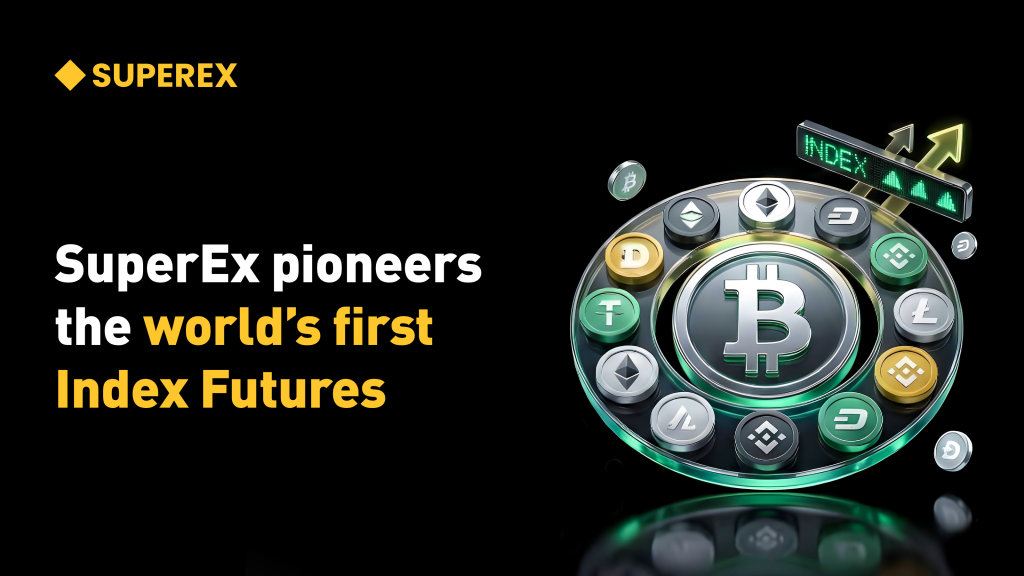
SuperEx Index Futures: The World’s First — Contract Trading with Direct Settlement in Small Tokens

#IndexFutures #SuperEx
We’ve talked plenty about the problems with traditional crypto futures — only supporting major assets, forcing users to swap coins and eat slippage and fees, and so on.
But when it comes to small-cap tokens, people have pretty much only focused on one thing: volatility. A lot of folks just want to ride a wave of price action and then dip. Nothing wrong with that — it’s common.
So for most small-cap tokens, the issue isn’t whether there’s volatility. The real issue is: there’s no liquidity system that can sustainably “feed” the market.
Here’s what usually happens: After one big pump, liquidity dries up fast. And from then on, these small caps can only:
- Be traded spot,
- Be speculated in one direction,
- Stay hot only when fresh money flows in.
Once the volatility is gone, the asset goes back to sleep. No reuse. No flywheel. Just dead weight.
And honestly, the reason isn’t that complicated. In the traditional futures structure, small tokens can be traded — but they can’t be used. Collateral is almost entirely based on USDT, BTC, or ETH. Small tokens can’t settle trades directly, let alone become part of risk management or strategy design.
So we’ve got a structural mismatch that’s been ignored for too long: Tons of small token assets, but no matching futures liquidity system.
That’s exactly the problem SuperEx’s new contract system sets out to solve. It’s not just about adding more tickers — it’s about unlocking and rebuilding the liquidity value of small tokens from the ground up.
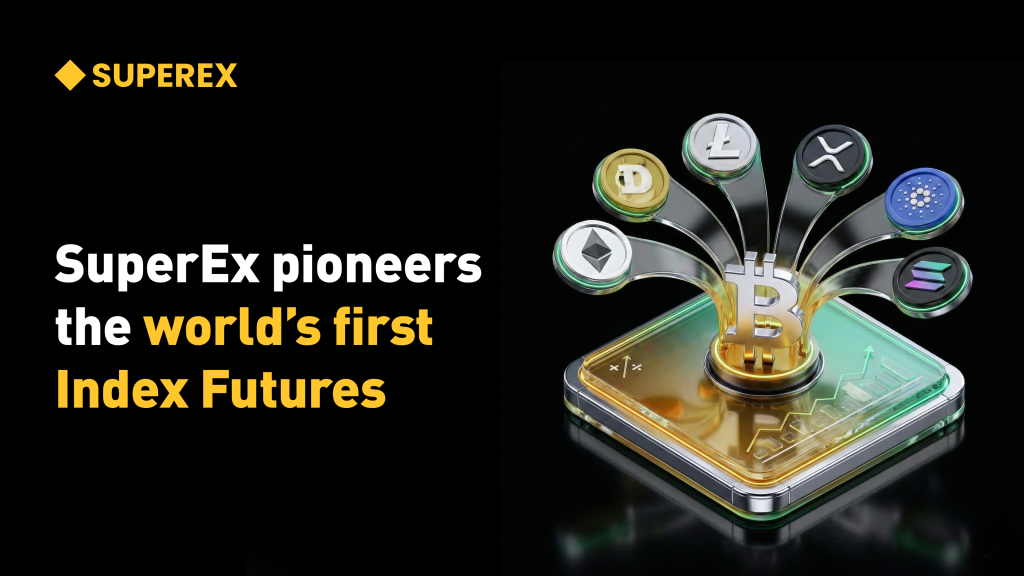
With Index Futures and a direct settlement mechanism for small tokens, SuperEx is giving these long-marginalized assets their first real shot at the main stage in the futures market.
- Click to register SuperEx
- Click to download the SuperEx APP
- Click to enter SuperEx CMC
- Click to enter SuperEx DAO Academy — Space

From “swap to USDT first” → to “trade with the token you already hold”
The reason why traditional futures are so tied to USDT is simple: unified settlement units and easier risk models. But today, that design is showing serious cracks.
For a lot of users, small tokens aren’t just “short-term spec plays.” They’re part of a long-term portfolio that’s already been allocated. So when you have to keep swapping out of your positions just to chase major trends — it messes up your asset logic.
The core shift with SuperEx’s Index Futures is: Users don’t need to sell their tokens first just to trade major market moves.
In this system, you can use your small-cap tokens directly as margin and settlement assets — but the contracts are still pegged to index prices of majors like BTC or ETH.
You’re trading the big picture, not your low-liquidity token’s own volatility.
- No need to convert to USDT or BTC first
- Avoid slippage and swap friction
- Way more flexible in managing your funds
This isn’t just some “new gimmick.” This is a fundamental redesign of the trading path.
Put simply: You don’t have to liquidate your small tokens just to enter major market trades. No conversion cost, no shifting assets back and forth, no decision fatigue.
For many users, small tokens are long-term plays. Major coin movements are short-term opportunities. This product connects the two, letting you hold long but still move fast.
Index Pricing + Perpetual Structure = Strip the Risk Out of “Small Cap Volatility”
Here’s a key point that gets overlooked a lot:
Small tokens are terrible for price discovery, but great for value participation.
- If you pair small tokens against each other, you’re just amplifying illiquidity and noise.
- If we want to use small tokens as settlement units in futures, we’ve gotta strip the risk of their own price swings out of the equation.
That’s where SuperEx’s multi-exchange weighted index pricing system comes in — combined with a proven perpetual contract structure.
- Index prices pulled from multiple exchanges
- Filters out noise and weird spikes
- Liquidation and settlement use mark price, not last trade
- Ensures fairness and stability
So you’re not trading the small token itself — You’re trading BTC, ETH and other majors’ average market moves.
This solves a huge problem: When small caps have thin liquidity or shallow order books, prices can get nuked by a single fat finger. You get fake wicks, weird spikes, and unnecessary liquidations.
Now? The volatility is anchored to the major market consensus, not your small token’s chaos.
This structure makes the whole trading experience feel a lot more like index contracts in traditional finance — but still keeps crypto’s strengths: flexible assets, open settlement.
From “just holding” → to “strategic participation”
Here’s what really makes Index Futures interesting: It’s not just about “can I use this token as margin” — It’s about changing the role of small tokens altogether.
In the old model, small tokens were just static positions: Price goes up, you smile. Price goes down, you HODL and hope.
Now, they become functional:
- Use them as margin
- Trade major market trends
- Profits and losses settled directly in the same token
That means small caps aren’t just about hoping for future gains anymore — They can actually take an active role across market phases.
- For long-term holders: it boosts asset efficiency
- For quant and strategy traders: it opens new hedging and arbitrage opportunities
It’s not here to replace USDT — it’s here to give users more choices
Let’s be clear — Index Futures aren’t trying to replace USDT-based or coin-margined contracts. What they do is fill a critical missing piece.
- USDT-margined = great for standardized trading and capital management
- Coin-margined = ideal for long-term holders of BTC/ETH
- Index Futures = finally lets small-cap holders tap into major market trends
This means the SuperEx contract system is no longer built around just one settlement asset — It’s built around your actual asset structure and real trading needs.
Other Key Advantages
1. A new tool for hedging and arbitrage
Use this product to:
- Hedge your small token positions
- Trade directional views on majors
- Open up more strategy options for quants and pros
2. Index-based pricing = more stable, more fair
- Weighted prices across multiple exchanges
- Smooths out freak spikes
- Liquidation and settlement use mark price
- Way better trading experience and system stability
3. Expands the contract product matrix
Moves beyond just USDT-based and coin-based contracts
→ Creates a differentiated index derivatives system
→ Strengthens SuperEx’s innovation edge and brand identity
Step-by-step walkthrough (based on real user experience)
Step 1
Asset transfer: Move your token (e.g. SHIB) from spot account into your Index Futures account Example: deposit 10,000 SHIB
Step 2
Choose the index price you want to track — e.g. BTC/USDT
Step 3
Set leverage and margin mode — e.g. 10× leverage, cross margin
Step 4
Confirm position size and direction — e.g. go long with 500,000 SHIB
Step 5
Manage your position: Monitor the index price of BTC/USDT, close when appropriate
Step 6
Close the position — e.g. when BTC/USDT index price hits 110,000, close your position, unrealized PnL = +50,000 SHIB
Step 7
Settlement: PnL is settled directly in SHIB, funds instantly credited
Realized profit = 50,000 SHIB
Note: This is based on real usage by the author. Steps are for reference only. Actual trading involves fees, funding costs, and price spread impact.
A More Realistic Take
Index Futures won’t replace coin-margined contracts. Small token settlement isn’t gonna fit everyone either.
But their arrival proves one thing: The contract market is shifting — from one-off speculation to structured risk tools.
And SuperEx is choosing to lead that change.
Not for hype. But to make contracts match the actual shape of the market again.


Responses