
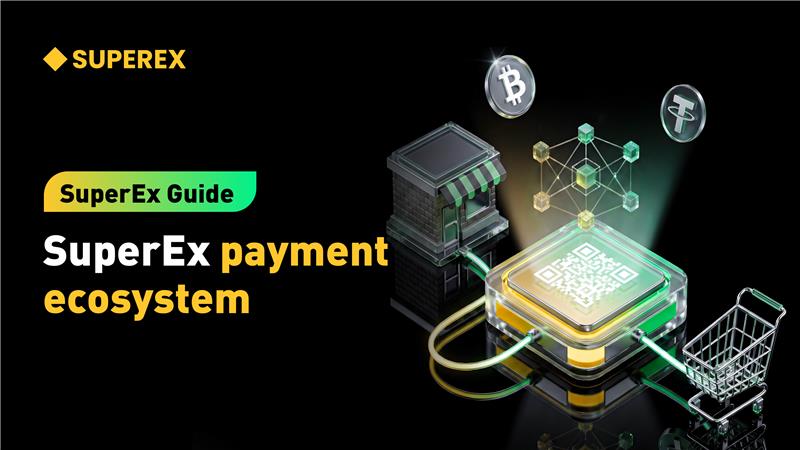
SuperEx Payment System: On-Chain Transfers + SuperEx Pay Integrated Solution

#SuperExPay #OnChainTransfers
Crypto payments are often seen as the redemption of traditional cross-border payments, addressing pain points like long settlement cycles, high fees, and complex procedures.
However, on-chain transfers alone face issues like high user barriers, complex operations, and limited ecosystem compatibility. On the other hand, purely centralized payment tools fail to fully embody the decentralized advantages of crypto assets. As a result, crypto payments have long been stuck in an awkward in-between state:
- On-chain transfers are secure and globally accessible
- But experiences remain complicated, costs volatile, and confirmations slow, keeping them away from practical commerce.
In reality, what merchants want is simple: fast receiving, stable usage, clear accounting, and controllable costs — not to make users study wallet addresses, gas, or block confirmations. That is exactly the problem the SuperEx payment system is solving.
- Click to register SuperEx
- Click to download the SuperEx APP
- Click to enter SuperEx CMC
- Click to enter SuperEx DAO Academy — Space
Product Positioning: Not Just “On-Chain Payments,” But “Frictionless Access to the Global Crypto Economy”
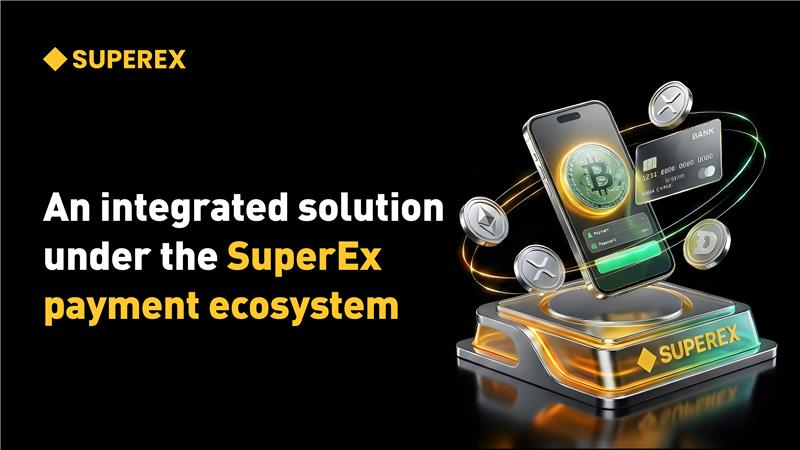
The SuperEx Payment System is not a single product, but a comprehensive solution designed for real-world business scenarios. Its core positioning is clear:A fusion of on-chain fund transfers and the internal settlement system of SuperEx Pay.
This is one of SuperEx’s ongoing efforts to apply crypto assets in real commercial environments. It has led to a comprehensive payment solution covering both on-chain and off-chain, multi-industry, and multi-scenario applications — SuperEx Pay.
With high concurrency, low cost, and excellent UX, SuperEx Pay enables merchants to enjoy smoother payment experiences and higher conversion rates — all under the guarantees of security, compliance, and cost-efficiency.
This system combines on-chain transfers with SuperEx’s internal ledger architecture, supporting both Web3 platforms and cross-border business use cases, as well as offline retail scenarios — offering safe, seamless, and conversion-optimized payment experiences.
On-Chain Payment Models: Fixed Address vs. Rotating Address
1. Fixed Address Payments — Like Exchange Deposits: Simple, Stable, Trusted
Best suited for:
- Exchange-style deposit flows
- High repurchase users
- Long-term asset retention
- Merchants requiring top-tier UX
Advantages:
- Exchange-like deposit experience: Each user gets a unique, permanent deposit address. No need to retrieve a new address each time.
- Lower user operation cost: No expiration issues, no failed deposits due to outdated addresses.
- Boosted trust & repurchase rate:
- Fixed addresses align with user habits
- Promotes asset retention and long-term user engagement
Since addresses are persistent, the system must continuously monitor them on-chain, which incurs higher gas costs, but in exchange delivers better user experience and higher conversion.
2. Rotating Address Payments — Born for High Concurrency and Cost Efficiency
Best suited for:
- High-frequency deposits
- Cost-sensitive merchants
- Event-based or short-cycle businesses
- Traffic-heavy platforms
Advantages:
- Dynamic address generation: Each deposit request generates a unique address, valid for 30 minutes.
- Lower on-chain costs: Temporary addresses reduce long-term monitoring needs, minimizing gas usage.
- Automated processing, secure & controlled: Fully system-driven with no manual intervention required — balances efficiency and safety.
SuperEx Pay Collection & Payment System: Delivering the Ultimate Payment Experience
If on-chain collection solves the problem of how assets safely enter the system, then SuperEx Pay solves how payment becomes as smooth as Web2.
Built on SuperEx’s internal ledger system, SuperEx Pay enables:
- Zero gas fees for user payments
- Instant confirmation for merchant receipts
- High concurrency, low latency
1. Fixed QR Code
Best suited for:
- Brick-and-mortar stores
- Physical merchants
- Long-term placement (e.g., at cashier counters)
Key experience: Merchants generate a QR code once, use it permanently. Users scan with the SuperEx App to pay — no blockchain involvement, and no gas cost.
This makes crypto payments finally compatible with:
- High-frequency transactions
- Micro-payments
- Offline real-world scenarios
2. Dynamic QR Code
Best suited for:
- E-commerce
- Online merchants
- API / H5 / Web payments
- Scenarios with dynamic order amounts
Core advantages:
- Unique QR code for every order
- Auto-linked amount and order ID
- System-level reconciliation — greatly reduces payment disputes
For merchants:
- Easier reconciliation
- More efficient finance ops
- Minimal manual processing required
For users:
- Short, fast payment flow
- No on-chain gas fees
- Immediate confirmation upon payment
Final Word: One System, All Payment Scenarios
From on-chain to off-chain, online to offline, SuperEx is not offering fragmented features — But a complete, composable payment system.
SuperEx offers a crypto payment solution that combines on-chain and off-chain capabilities, supporting both fixed and rotating addresses, as well as QR code-based payments via SuperEx Pay.
Whether you prioritize user experience, cost control, or scalability under high load, SuperEx can offer the most suitable payment solution for your needs.
Before crypto payments can truly go mainstream, experience, cost, and stability will always matter more than “technical specs.”And that’s exactly where SuperEx Pay starts.

Responses