
LEARN ELDER’S FORCE INDEX (EFI)INDEX IN 3 MINUTES – BLOCKCHAIN 101


Introduction: Why Do We Need the EFI Indicator?
In the highly volatile crypto market, technical indicators are essential tools for investors to identify trends and mitigate risks. However, most indicators focus solely on price or volume, making it difficult to fully capture the dynamics of market forces. The ELDER’S FORCE INDEX (EFI), on the other hand, combines price movements and trading volume to quantify the true driving force behind market movements, making it a critical tool for identifying trend strength and reversal signals. This article will delve into the core logic of EFI from three dimensions—principles, parameter settings, and practical applications—and demonstrate its value through recent crypto market cases .
I. Core Logic and Formula Breakdown of the EFI Indicator
-
Design Philosophy: The Synergy Between Price and Volume
The EFI was developed by renowned trading psychologist Alexander Elder, with the core idea that price movements must be supported by volume; otherwise, the trend is unsustainable. For example, if a token’s price surges but trading volume declines, it may indicate weakening bullish momentum. Conversely, a price drop accompanied by high volume suggests bearish dominance.
-
Calculation Formula: Quantifying Market “Force”
The EFI calculation involves two steps:
Raw EFI Value: EFI=(Current Close Price−Previous Close Price)×Current Volume
This formula multiplies the price change by the trading volume. If the price rises with high volume, the EFI value is positive and large; otherwise, it is negative.
Smoothing (EMA):
To reduce short-term noise, the raw EFI value is often smoothed using an Exponential Moving Average (EMA), typically with periods of 13 days (short-term) or 100 days (long-term).
EFIEMA=EMA(EFI,N)
Key Point: The choice of EMA period depends on trading style—short-term traders focus on the 13-day EMA to capture short-term momentum, while long-term investors rely on the 100-day EMA to assess trend sustainability.
II. Four Practical Applications of the EFI Indicator
-
Confirming Trend Strength: The Warning Role of Divergence
Case Study:
On January 27, 2025, the DeFAI sector token GRIFFAIN dropped 25.97% in a single day. However, the EFI indicator had already shown expanding negative values for three consecutive days prior to the crash, and the EMA(13) crossed below the EMA(100), forming a “death cross,” signaling increasing bearish momentum. Divergence (price making new highs while EFI weakens) is a classic reversal signal.
-
Identifying Entry and Exit Points: Zero-Line Crossovers and EMA Crosses
- Zero-Line Boundary:An EFI value above zero indicates bullish dominance, while below zero suggests bearish control.
- Crossover Signals:When the EMA(13) crosses above the EMA(100), it is a buy signal, and vice versa. For example, the meme token Pudgy Penguins (PENGU) rose 3.64% on January 27, with its EFI’s EMA(13) breaking above the zero line and diverging upward two days prior.
-
In-Depth Analysis of Price-Volume Divergence
Types of Price-EFI Divergence:
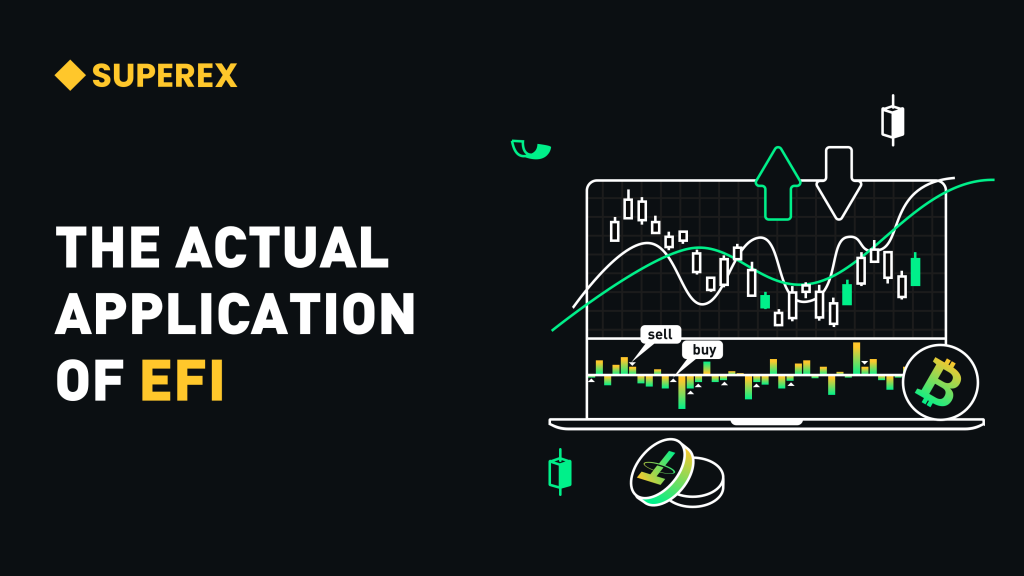
- Bullish Divergence: Price makes a new low, but EFI rises, indicating weakening bearish momentum.
- Bearish Divergence: Price makes a new high, but EFI declines, suggesting weakening bullish momentum.
- Practical Significance:In early January 2025, the AI token ai16z (AI16Z) showed multiple EFI bearish divergences during its upward trend, followed by a 13.70% market correction, validating the effectiveness of this signal.
-
Combining Market Sentiment and Macro Context
EFI should be used alongside other indicators (e.g., RSI, MACD) and macro events. For instance, the rise in U.S. Treasury term premiums in mid-January put pressure on the crypto market, and the persistently negative EFI values helped confirm capital outflow risks.
III. Limitations of EFI and Optimization Strategies
-
Limitations of a Single Indicator
- Lagging Nature:While EMA smoothing reduces noise, it may delay signals.
- Ineffectiveness in Extreme Conditions:During panic selling, EFI may remain oversold while prices continue to fall.
-
Optimization Strategies: Multi-Dimensional Validation
- Combining Volatility Indicators: Tools like Bollinger Bands can identify overbought or oversold conditions.
- Filtering Macro Events: For example, Trump’s policies on debt risk may amplify EFI signals.
- Supplementing with On-Chain Data: Metrics like holder distribution and exchange inflows can validate EFI’s reflection of capital flows.
IV. Latest Crypto Market Case: How EFI Predicted the DeFAI Sector Crash
Using the DeFAI sector’s 28.73% crash on January 27 as an example:
- Pre-Crash Signals: The EFI(13) of sector leader GRIFFAIN fell below the zero line on January 24, and the EMA(13) crossed below the EMA(100), forming a death cross.
- Volume Confirmation:On the crash day, trading volume surged 150% above the weekly average, and EFI reached a historical low, confirming bearish dominance.
- Counter-Trend Opportunities:Layer1 token Jupiter (JUP) rose 8.70% after its EFI(13) rebounded above the zero line.
V. Conclusion: The Irreplaceable Value of EFI in the Crypto Market
By quantifying the synergy between price and volume, EFI provides investors with the following core benefits:
- Identifying False Breakouts:Price movements without volume support are often traps.
- Capturing Trend Reversals:Divergence signals provide early warnings of risks.
- Optimizing Position Management: EMA crossovers help refine entry and exit timing.
In the highly volatile crypto market, EFI is an indispensable tool for building a robust trading system. However, investors must remember: No single indicator guarantees success; combining macro analysis and on-chain data is key to maximizing success rates.



Responses